
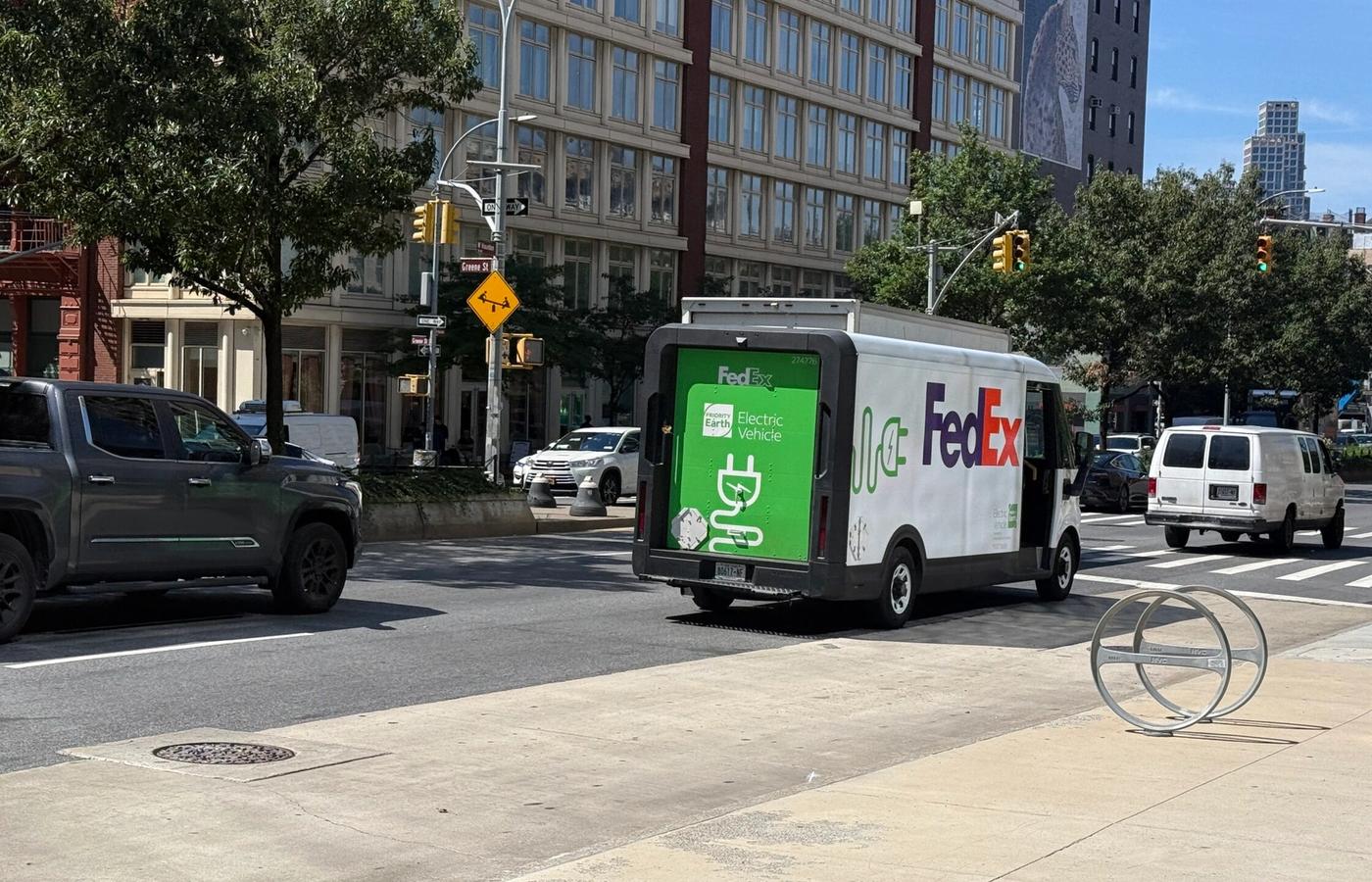
The electric vehicle is not a newly emerged, cutting-edge invention. The internal combustion engine and the electric motor entered the auto industry at almost the same time, in the late 19th century. Around 1900, electric cars were actually more popular than gasoline-powered cars in the U.S. market. Prominent figures of the day, including Thomas Edison and Clara Ford (the wife of Henry Ford), favored electric cars because they were quieter, vibrated less and were easy to drive.
The electric vehicle is not a newly emerged, cutting-edge invention. The internal combustion engine and the electric motor entered the auto industry at almost the same time, in the late 19th century. Around 1900, electric cars were actually more popular than gasoline-powered cars in the U.S. market. Prominent figures of the day, including Thomas Edison and Clara Ford (the wife of Henry Ford), favored electric cars because they were quieter, vibrated less and were easy to drive. But in the 1910s, Henry Ford introduced conveyor-belt mass production, dramatically lowering the price of gasoline cars. Gasoline prices also plunged after the discovery of the great Texas oil fields, and the electric starter motor was invented. Electric cars then fell into a long sleep lasting nearly 100 years.

Electric vehicles returned to the historical stage in the late 20th century, in step with tightening environmental regulations. When the California Air Resources Board (CARB) implemented its Zero-Emission Vehicle (ZEV) mandate in 1990, GM fired the starting shot for an EV revival by unveiling the mass-produced EV1. But because of the limits of battery technology, lobbying by oil giants and the lukewarm attitude of automakers trying to protect profit structures built around the internal combustion engine, the EV1 met an unfortunate end: every unit was recalled and scrapped. That grim history finally reached a turning point in the late 2000s, when the Silicon Valley startup Tesla launched its high-performance Roadster, powered by lithium-ion batteries, and the Model S.
From the late 2010s through the early 2020s, the world was truly in an age of "EV mania." The European Union's strict carbon emission rules, the Chinese government's subsidies for new energy vehicles (NEVs) and the U.S. Inflation Reduction Act (IRA) drove explosive growth. Major automakers around the world competed to announce that they would completely end internal combustion production by 2030 or 2035. Capital markets assigned astronomical valuations to EV companies, and tech optimists confidently predicted that the end of the internal combustion engine would arrive in no time. Behind that rapid expansion, however, lay a hard-to-bridge gap between "technological maturity" and "mass-market adoption."
The Cold Wall of the 'Chasm' and the Pragmatic Backlash: Hybrids and Diversified Paths to Electrification
As the mid-2020s set in, the EV market has been freezing rapidly. The "chasm" described in technology adoption life cycle theory, the stall in demand that occurs after early adopters have made their initial purchases and before mainstream consumers follow, has shaken the global auto market. Amid steep inflation and high interest rates, the price of battery electric vehicles (BEVs), more than 30 percent higher than comparable internal combustion cars, has loomed as a huge barrier for consumers. Add to that sharply reduced winter driving range, anxiety about battery fires and the frustration of facing broken chargers, and tech optimism quickly gave way to cold realism.
In this sober market climate, the technologies that staged a dramatic reversal are hybrids (HEVs) and plug-in hybrids (PHEVs). Only a few years ago, hybrids were treated as a "temporary bridge" to pure EVs or a "technology of the past." Now they have declared a full comeback. The so-called "Multi-Pathway" strategy of Toyota Chairman Akio Toyoda is being reappraised. When everyone else was going all in on pure EVs, he argued, "EVs will not exceed 30 percent of the global auto market, and diverse options such as hybrids and hydrogen vehicles are needed."

Automakers have also pivoted on all fronts. Global giants that once boldly declared an exit from internal combustion, including Ford, GM, Mercedes-Benz and Volvo, are postponing or canceling construction of dedicated EV plants and rapidly expanding their hybrid and extended-range electric vehicle (EREV) lineups. In an EREV, a small combustion engine serves only as a generator that charges the battery. It has emerged as an alternative that keeps the quiet ride of an EV while fully eliminating charging stress and range anxiety. This shows that electrification of the auto industry has no choice but to proceed in stages, in line with what the market can realistically accept, rather than through ideological shock therapy.
From Supplier-Driven to Consumer-Led: 'Value for Money' and 'Usability' Redefine the Market Order
The biggest change implied by the structural reset of the EV market is that leadership has shifted entirely from automakers' one-sided supply of technology to "the consumer's cool-headed choice." The era in which regulators and companies pressed consumers to buy by pointing to environmental imperatives and the fantasy of advanced autonomous driving is over. Today's car buyers take a pragmatic stance, scrutinizing everyday practicality and reasonable total cost of ownership (TCO) rather than the cause of "saving the planet" or showy performance such as a "3-second 0-to-60."
This recovery of consumer power has even changed the criteria for technological superiority in EVs. A prime example is the spread of lithium iron phosphate (LFP) batteries, which have lower energy density than nickel manganese cobalt (NMC) batteries but are cheaper and safer against fire. As major players, including BYD, often called China's Tesla, pour out affordable EVs under $25,000 equipped with LFP batteries, expensive premium EVs that have failed to achieve "price parity" (price equivalence with internal combustion vehicles) are losing their footing.

In charging infrastructure, too, usability, meaning "does it actually work," has become a key metric, ahead of grand network expansion. Global automakers joined Tesla's North American Charging Standard (NACS) in large numbers because consumers, tormented by complicated app downloads and payment errors, longed for the intuitive and reliable Tesla Supercharger ecosystem. Consumers are no longer fooled by half-baked software or unrealistic range claims pushed by automakers, and they open their wallets only for brands that offer clear price advantages and proven charging convenience.
Industrial Restructuring and the Cultural Landscape Ahead: Experts' Outlook for EVs
Experts are unanimous that the current chill in the EV market is not the end of electrification but a "period of qualitative maturation," in which an abnormal bubble deflates and fundamentals are strengthened. Leading auto industry analysts and academics offer the following detailed predictions of how EVs will change the industrial structure and humanity's mobility culture.

First, on the industrial side, the traditional manufacturing system based on mechanical engineering is expected to be fully absorbed into software-defined vehicles (SDVs) and the energy network industry. As in the "disruptive innovation" framework proposed by Harvard Business School professor Clayton Christensen, affordable EVs that were initially shunned for technical flaws will, through over-the-air (OTA) software updates and innovations in battery chemistry, gradually replace the internal combustion ecosystem from the bottom up. In the process, the auto industry will change completely, from precision manufacturing that assembles tens of thousands of parts into a mobile device connected to the power grid (V2G, Vehicle-to-Grid) and a huge data platform.
Second, on the cultural side, the car will be conceptually redefined from "an object to own and drive" to "an extended personal living space." Automotive futurists analyze that the interior space efficiency unique to EVs (a flat floor and no engine compartment), combined with vehicle-to-load (V2L) power supply, is turning the cabin into a road office, movie theater, camping space and personal retreat, going beyond a means of transportation. The culture of engine sound and mechanical feel that internal combustion provided is fading, and connectivity and AI-based spatial experiences will come to dominate car culture.
In conclusion, the shift to EVs is a foregone future, but the path to it will be a winding curve, not a straight line. What has taken the place of tech optimism's illusions is consumers' cool-headed pragmatism, and the market is flexibly moving, by way of the realistic alternative of hybrids, toward a more complete and economical EV era. Not overreaching regulation fixated on numbers, nor unilateral corporate dominance, but only technology that delivers real value to consumers' lives will be the ultimate winner in future mobility.
© NY&NJ. Unauthorized reproduction and redistribution prohibited.
ⓒ New York and New Jersey. Unauthorized reproduction and redistribution are prohibited.