
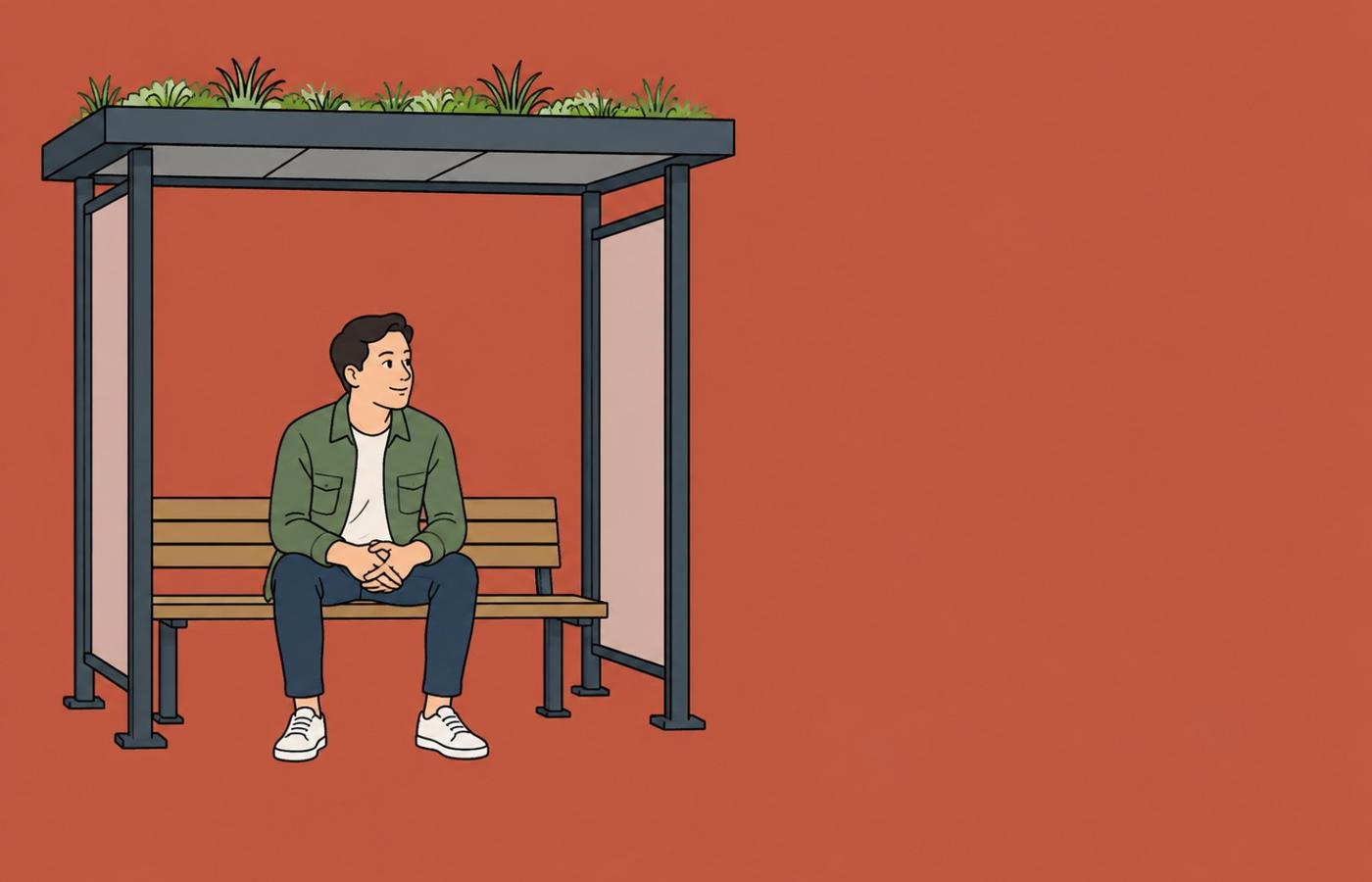
New York City on Sept. 16 launched a pilot program to change the roofs of four bus shelters on Pitkin Avenue in Brownsville, Brooklyn. One shelter received the city's first "green roof," planted with native plants, and the other three were fitted with a film that reflects sunlight. The goal is to reduce the heat riders endure while waiting for the bus.
New York City on Sept. 16 launched a pilot program to change the roofs of four bus shelters on Pitkin Avenue in Brownsville, Brooklyn. One of them is the city's first "green roof" bus shelter, planted with native plants, wild grasses and wildflowers. The other three were fitted with a thin film that reflects sunlight and lowers the surrounding temperature. The method is inexpensive and simple to install.
Brownsville is considered one of the neighborhoods in New York City most vulnerable to extreme heat. The city said bus shelters have been left out of heat-mitigation efforts because they are exposed spaces with no shade. Besides lowering temperatures, a green roof also captures some rainwater.
Part of the "Next Stop" Plan
The project fulfills a commitment in "Next Stop: Fast Buses, Better Service," the bus improvement plan announced last July by Mayor Mamdani and Gov. Kathy Hochul. It is being carried out jointly by the city's Mayor's Office of Climate and Environmental Justice (MOCEJ), the Department of Transportation (DOT), the nonprofit Resilient Cities Catalyst (RCC), the Pitkin Avenue Business Improvement District (BID) and JCDecaux, which manages the shelters.
DOT Commissioner Mike Flynn said that as temperatures rise and rain becomes more frequent, the city must find new ways to use green infrastructure. Over the coming weeks, the city plans to gather feedback from residents and nearby merchants to decide whether the program can be expanded to other neighborhoods. Brownsville residents can share their views through an online survey (available in English and Spanish).