
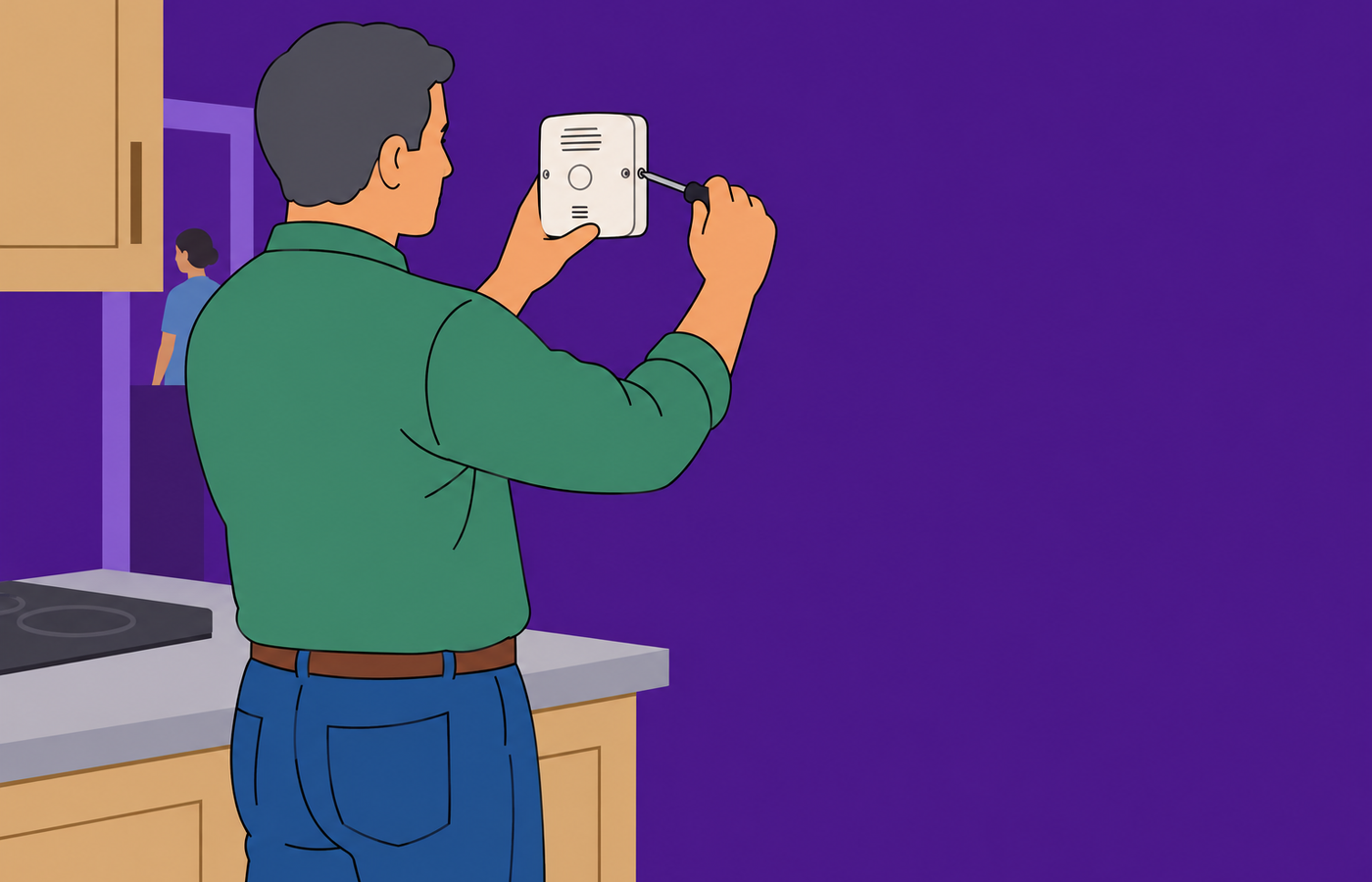
Under New York City Local Law 157, apartments, one- and two-family homes, hotels and single-room occupancy (SRO) buildings must have a natural gas detector in each unit by Friday, Jan. 1. Landlords must provide the detectors for tenant-occupied units. In Queens, a free detector giveaway will take place in Jamaica on Saturday, Dec. 5.
Most residential buildings in New York City must install natural gas detectors by Friday, Jan. 1, according to the Queens local outlet QNS. The requirement comes from Local Law 157 of 2016 and applies to owners of apartment buildings, private homes including one- and two-family houses, hotels and single-room occupancy (SRO) buildings. Detectors must be placed close to the gas appliances in each unit.
Landlords must supply the detectors for units occupied by tenants. According to the Department of Buildings (DOB), hardwired, plug-in (AC outlet) and battery-powered models are all acceptable. The city does not recommend a specific manufacturer or model, but products must carry UL 1484 or UL 2075 certification and markings. The DOB said battery-powered detectors can be placed wherever detection works best, with no outlet or wiring work required, and that compliant products are sold online and at hardware and home improvement stores.
Natural gas detectors monitor the air for methane and alert occupants to dangerous conditions. According to a DOB press release issued in October, natural gas used for heating and cooking can leak because of poor maintenance or damaged pipes, and when it builds up indoors it creates a fire hazard and can cause health problems if inhaled. In the release, Fire Commissioner Lillian Bonsignore said, in essence, that an alarm lets residents know before a situation becomes more dangerous.
The city has teamed up with utility companies to hold information sessions for building owners and is distributing detectors free, on a first-come, first-served basis, to owners of small residential properties. In Queens, the event will run from 10 a.m. to 12 p.m. on Saturday, Dec. 5, at the Thomas White Jr. Foundation Building in Jamaica, where staff will be on hand to answer questions. If a detector alarm sounds or you smell gas, leave immediately and call 911 from a safe distance.
Because the rule applies to buildings throughout New York City, it also covers apartments and one- and two-family homes in Queens neighborhoods with large Korean American communities, such as Flushing and Bayside. Tenants can ask their landlord to confirm that a detector has been installed, and homeowners should check the product's certification marking before the deadline.