

Several years ago, when the COVID-19 pandemic swept the globe, the media and futurists declared in unison that "the era of the office is over." The hybrid model, built on two to three days of remote work a week, seemed set to become the absolute standard of the future workplace almost overnight. Yet the personnel policies of global companies around the world are now swiftly ending that grand experiment in flexibility.
Several years ago, when the COVID-19 pandemic swept the globe, the media and futurists declared in unison that "the era of the office is over." The hybrid model, built on two to three days of remote work a week, seemed set to become the absolute standard of the future workplace almost overnight. Yet the personnel policies of global companies around the world are now swiftly ending that grand experiment in flexibility. From big tech firms to traditional financial institutions, employers are aggressively pushing "RTO (Return to Office)" policies that scrap schedules of three or fewer days in the office and mandate four to five days a week.
This major policy shift is clearly confirmed by labor statistics. According to the Back-to-Work Barometer, a keycard swipe index from Kastle Systems, which tallies entry and exit data for commercial buildings in major U.S. cities, average office occupancy in the 10 largest U.S. metropolitan areas, including New York, Chicago and San Francisco, has recovered well from the 10% to 20% range it plunged to right after the pandemic. It now stands above the 50% to 60% mark and continues to climb. In Manhattan, where finance and professional services are concentrated, office occupancy during the midweek peak (Tuesday through Thursday) is approaching 70%, and attendance on Fridays and Mondays has also risen sharply.
Companies are mandating four to five days in the office despite strong employee resistance on the basis of clear empirical data. According to the latest labor productivity report from the National Bureau of Economic Research (NBER) and a research team led by Professor Nicholas Bloom of Stanford University, the productivity of fully remote workers was measured at roughly 10% to 20% lower, on average, than that of full-time office workers. Even if the speed of individual tasks is maintained, efficiency fell markedly in onboarding new employees, spontaneous knowledge sharing within the organization, and in-person collaboration to resolve complex issues. Professor Bloom analyzed that "fully remote work has been found to fragment communication and tends to erode an organization's long-term capacity for innovation," and said such empirical figures have given corporate executives a powerful justification for returning to office-based discipline.
Tectonic Shifts in the New York Metropolitan Housing Market: The Reversal of the "Exodus" and Rising Prices Near the Urban Core
As in-office days are readjusted to four to five a week, the physical distance between home and workplace has once again emerged as the most decisive variable shaping people's lives. When remote work was widespread, New Yorkers moved in large numbers in search of comfortable living environments and big yards, heading to outlying parts of New Jersey (Sussex and Hunterdon counties), deep suburban Connecticut and the East End of Long Island, places that take more than 1 hour 30 minutes each way to commute from. This was the so-called "Urban Exodus." But the reality of full-time commuting, which means spending three to four hours on the road every day, quickly shattered the romance of suburban life.

As a result, the data show a stark reshuffling in the metropolitan housing market: surging prices in areas near the urban core and fading demand in distant suburbs. According to housing market reports from the National Association of Realtors (NAR) and Douglas Elliman, apartment rents and sale prices along the New Jersey Hudson River waterfront (Jersey City, Hoboken, Edgewater and Fort Lee), as well as in Queens (Long Island City) and Brooklyn, where Manhattan is reachable within 30 to 40 minutes, are setting new record highs day after day.
Real estate experts describe this trend as a "revaluation of commuting time." A senior analyst at a major New York real estate firm pointed out, "When people came in two days a week, commuting time wasn't a major obstacle, but under a four-to-five-day system, a trip of more than an hour each way decisively damages quality of life. As a result, demand to buy and rent is surging toward 'Goldilocks' residential areas with commutes of around 30 minutes." Meanwhile, home sales in distant outer suburbs, which saw near-bubble gains during the pandemic, have plunged and the market has clearly stalled, with days on market (DOM) rising sharply. For workers who must be in the office five days a week, the "time value" of cutting the daily commuting stress now commands a far higher premium than the "big yard and home office" that large suburban houses once offered. Even inside the home, demand for large home-office space is shrinking, and a return to compact layouts that maximize the comfort of sleep and rest is accelerating.
Redrawing the Spending Map: Manhattan's Business Districts Revive as Suburban Local Commerce Catches Its Breath
The shift to a four-to-five-day office schedule is completely redrawing the metropolitan spending map, where hundreds of millions of dollars change hands. According to foot-traffic data from the New York City Economic Development Corporation (NYCEDC) and the Metropolitan Transportation Authority (MTA), weekday foot traffic in Midtown Manhattan and the Financial District (FiDi) has risen more than 15% from a year earlier. In step with this, the "Lunch & Happy Hour Economy," a core pillar of the downtown economy, has fully revived.
Weekday sales at specialty coffee shops, salad chains, fitness clubs and the bars where office workers gather after work in Manhattan's commercial districts have recovered to 85% to 90% of pre-COVID levels. The "sandwich day" phenomenon, in which the entire downtown went quiet on Mondays and Fridays during the three-day-a-week era, has eased considerably, giving businesses a steady cash flow.
In contrast, local cafes and brunch restaurants in suburban New Jersey and Connecticut, which benefited during the pandemic by absorbing remote workers' weekday spending, are suffering substantial sales declines. As weekday daytime foot traffic in suburban commercial areas has dropped sharply, local merchants on the outskirts have returned to the tough pre-pandemic business environment of relying only on weekend rushes.
Workers' household spending portfolios have also changed significantly. According to transportation statistics, as NJ Transit pass purchases and vehicle traffic through the Hudson tunnels and the George Washington Bridge have surged, average monthly transportation and parking spending per worker has risen by more than 20% to 30%. As reliance on meal kits, grab-and-go meals from large supermarkets and delivered food has grown again to make up for the time and energy spent commuting, household spending is being restructured so that processed food and dining out far outweigh the cost of home cooking.
Friction Between Politics and Social Infrastructure: Transit Overload and the Conflict Over Congestion Pricing
The great RTO shift is not limited to changes in individual residents' housing and spending patterns; it is deepening the social friction where massive urban infrastructure collides with politics. City transit networks and road infrastructure that were scaled back or only minimally maintained for years to match flexible work are now straining under the flood of commuters coming in four to five days a week.
According to subway and bus ridership counts from the MTA and NJ Transit, weekday rush-hour crowding has already approached pre-pandemic levels. As a result, commuter train delays, equipment failures and severe crowding have pushed passenger fatigue to dangerous levels.
Amid this infrastructure overload, New York City's congestion pricing policy has become a flashpoint for social conflict in the city. The policy, which charges tolls on passenger cars and commercial vehicles entering Manhattan south of 60th Street, is landing as an enormous financial blow to commuters from New Jersey and the outer suburbs who now come in more days.
An urban transportation policy expert diagnosed the situation: "Congestion pricing has policy goals of funding public transit and improving the downtown environment, but because the comfort and capacity of transit infrastructure have not fully recovered, the push for RTO has maximized residents' emotional and economic backlash." The New Jersey state government and civic groups in the outlying areas are pushing back strongly, saying, "New York is trying to plug the financial deficit of its transit infrastructure by emptying the pockets of workers across the river," and the dispute has spread into legal battles and political confrontation. As the justification for green policies aimed at easing downtown traffic and improving air quality collides head-on with the right to mobility, a matter of livelihood, for workers forced into the commute, the bonds of the wider metropolitan community are suffering the deepest rift in their history.
The Paradox of the AI Era: Forced Control and Collaboration, or the Prelude to a Second Wave of Flexibility?
At a time when artificial intelligence (AI) and large language models (LLMs) are rapidly transforming society as a whole, companies increasing in-office days reads as highly paradoxical. Can this pattern of tying people to physical spaces in an era of maximized digital automation really last? Experts analyze the phenomenon from two perspectives: "short-term control and enforced collaboration" and "a long-term second wave of flexibility in the labor structure."
In the short term, companies are forcing RTO because of executives' anxiety and security risks tied to adopting AI. Scholars of technology management explain that as AI tools become widespread, there is a desire to control and supervise whether employees are actually doing productive work, and that the need to work within a controlled internal security network has grown to prevent leaks of corporate secrets and data. In addition, executives judge that as AI replaces simple routine tasks, the core values required of human workers are "sparks of ideas," "complex problem solving" and "emotional connection," and that these are maximized through direct, in-person interaction rather than communication through a monitor screen.
In the long term, however, this push for RTO will inevitably face another major rift as AI becomes more advanced. Labor economists are unanimous: "Once AI tools reach the stage of dramatically cutting human workers' working hours, a labor management system based on 'seat time' in the office, as in the past, will become completely useless."
Ultimately, the future labor market will shift to a fully performance-based system in which the only criterion is not "how many hours you sat in the office" but "what outcomes you produced using AI." Once outcome-based evaluation takes hold, methods of control that force physical attendance will lose their force, and a "second-generation hybrid flexible work arrangement," such as a four-day workweek or coming in for focused collaboration in the morning and leaving early, will emerge as the new standard.
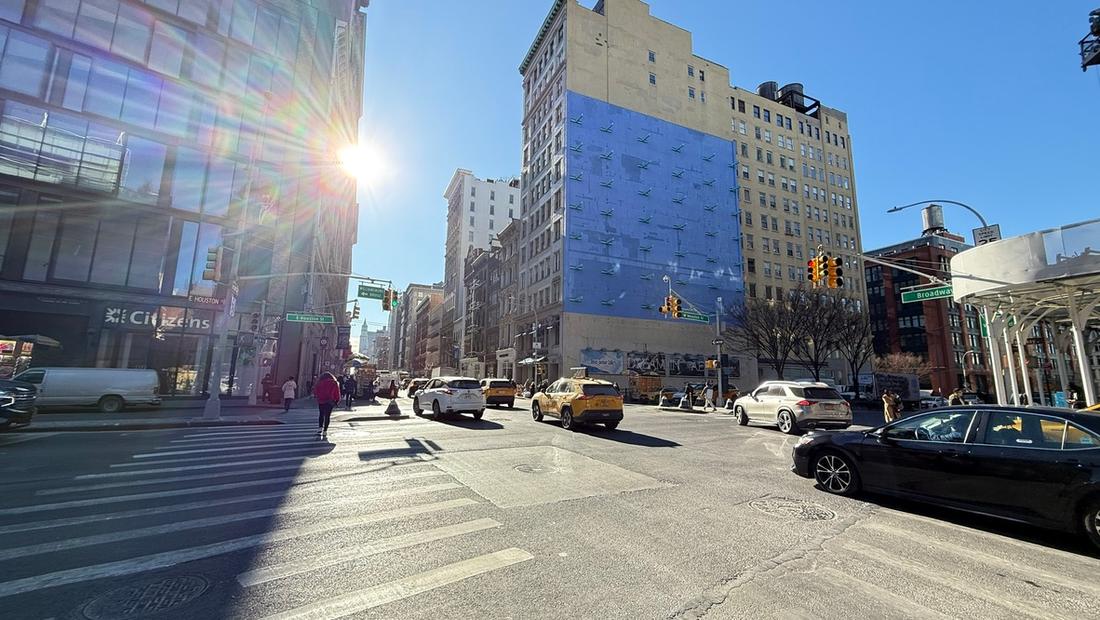
In the end, the return to four-to-five-day RTO that we are witnessing now is a temporary corporate reaction to the excessive remote work of the pandemic years and a transitional phenomenon of control just before the move into the AI era. New York and metropolitan areas around the world are now enduring the pain of physical commuting brought on by the end of the pandemic legacy, but they stand at a historic test, needing to prepare soon for another massive upheaval: the new forms of liberation in space and time that AI will bring.
© NY&NJ. All rights reserved. Unauthorized reproduction and redistribution prohibited.
ⓒ New York and New Jersey. Unauthorized reproduction and redistribution are prohibited.