
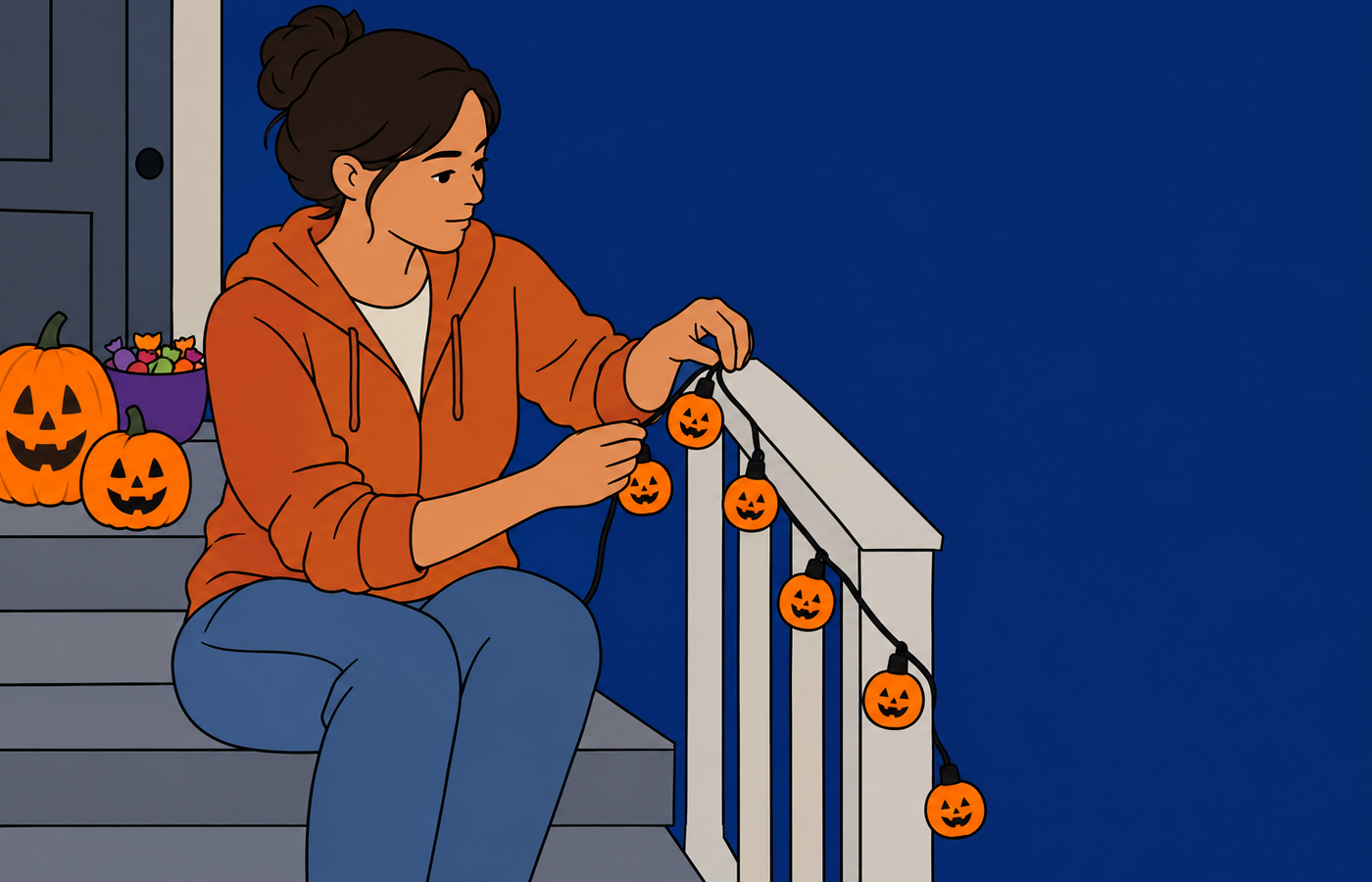
Americans are expected to spend an average of $115 per person on Halloween this year, according to a survey. Decorations alone come to $37 per person, or $4.3 billion nationwide. Here is a breakdown of budgets at each level, from a modest front porch to the house that stands out in the neighborhood, along with how much candy to buy for trick-or-treaters.
Halloween is almost here, falling on Saturday, Oct. 31. Many households are deciding between a single pumpkin on the porch and a giant skeleton in the yard. According to a survey the National Retail Federation (NRF) released in September, U.S. consumers are expected to spend $13.5 billion on Halloween this year, roughly in line with last year's record of $13.1 billion. Average spending per person is $115.14, nearly the same as last year's $114.45.
Decorations: $37 per person
Spending on decorations is nearly equal to spending on costumes and higher than spending on candy. Of those surveyed, 78% said they plan to buy decorations, and 42% said they will decorate their home or yard. Because of price pressures, 34% said they will choose items they can reuse next year. Some 74% of respondents said they will celebrate Halloween, up from 68% in 2019, before the COVID-19 pandemic. Pet costumes are expected to account for $920 million in spending, with pumpkin the most popular outfit.
How Much Will Your Home Cost?
Budgets vary widely depending on how much you decorate. The figures below are newsroom estimates based on typical prices at discount stores and Halloween specialty shops. Prices for the same item differ by store and timing, and most items are marked down 50% or more after Halloween.
Home Depot's 12-foot (3.7-meter) giant skeleton "Skelly," which has become a symbol of yard decorating, is again on sale this year for $299. Shipping is extra, and it sells out early every year. If you are decorating for the first time, it is more economical to spend on lights and large props you can reuse every year and cut back on single-use items such as pumpkins and cobwebs.
How Much Candy Should You Buy?
A good rule of thumb is 2–3 pieces of candy per child. The question is how many children will come. Apartment buildings and quiet neighborhoods may see 20 to 30, while residential streets known for Halloween can draw more than 100. If it is your first year, ask your neighbors what last year was like, and it is better to have too much than too little.
Candy prices rose again this year. In a survey by consumer finance site FinanceBuzz, a 100-piece bag of assorted candy averaged $16.96, up 3.5% from a year earlier and 71% higher than in 2021 ($9.91). According to U.S. Bureau of Labor Statistics data, candy and gum prices rose 7.7% in the 12 months through September. Chocolate products have risen especially sharply as cocoa prices jumped, and many products have shrunk in size while keeping the same price. It is better to compare the price per piece than the price of the bag. Mixing in gummies or hard candy instead of chocolate can cut the per-piece cost considerably.
Leftover candy drops to half price or less after Halloween, so if buying a big stock up front is a burden, you can also look for discount racks at your local pharmacy or supermarket on the afternoon of Halloween.