
New Jersey's "ABC test," which determines whether a worker is an independent contractor (1099) or an employee, took effect Oct. 1. A worker is considered an employee unless the business can prove all three of the following: it does not direct the work, the work is outside its usual course of business or performed outside its places of business, and the worker runs an independent business of their own. Business groups and the state Senate president asked for a delay until July of next year, but Gov. Mikie Sherrill did not agree. Misclassification can bring fines of up to $1,000 per employee and even stop-work orders.
If you issue 1099 forms instead of W-2s to people who work at your business, now is the time to review those arrangements. The New Jersey Department of Labor put into effect a new rule on Oct. 1 that sets out the standard for determining independent contractor status. Writing "independent contractor" in a contract or issuing a 1099 does not automatically make the classification valid.
All three conditions must be proven to qualify as an "independent contractor"
New Jersey has long used a standard known as the "ABC test." The new rule spells out how that standard is to be applied. The principle is simple: a worker is presumed to be an employee, and can be treated as an independent contractor only if the business proves all three conditions below.
Prong A is "direction and control." The business must not have dictated how or when the work is done, both in the contract and in actual practice. Prong B is "usual business and location." The work the person does must be different from the business's usual course of business, or be performed outside all of the business's places of business. Prong C is an "independent business." The person must be performing the work independently, for example by operating their own business and taking work from multiple clients.
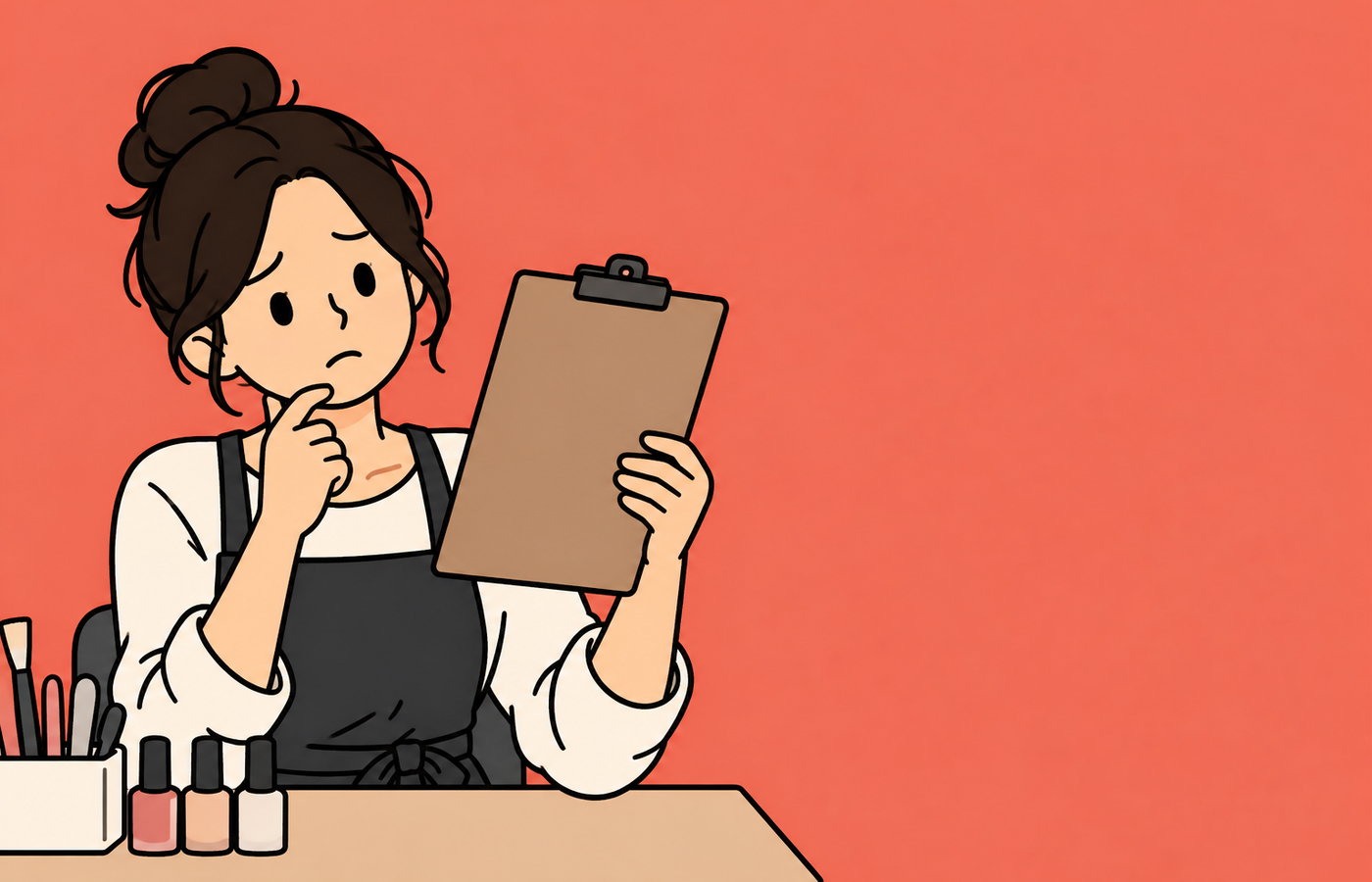
For example, a nail technician who comes in at set hours every day and serves customers at a nail salon would have difficulty meeting Prong B, because the work is the same as the shop's core business and is done on its premises. By contrast, a contractor who repairs the shop's sign a few times a year, or an accountant who keeps the books for several companies, is likely to qualify as an independent contractor.
What has changed
The new rule clarifies several points that had been interpreted inconsistently. Instructions a business must give in order to comply with the law, such as requiring workers to follow hygiene or safety rules, are not considered "control" by themselves. However, a worker's home has been excluded from the business's "place of business." This means that even a person who works from home would have difficulty qualifying as an independent contractor under Prong B if they perform the business's core work.
The standard applies to the Wage and Hour Law, which sets minimum wage and overtime pay; the Wage Payment Law, which restricts wage deductions; and the Unemployment Compensation Law, which sets unemployment insurance contributions. If a worker is found to be an employee, the business must pay overtime and unemployment insurance contributions.
Rule takes effect despite industry opposition
Business groups, including the New Jersey Business & Industry Association (NJBIA) and the state Chamber of Commerce, sent a joint letter in late September asking that implementation be delayed until July 2027. State Senate President Nicholas Scutari also lent his support, saying a nine-month delay was reasonable. The business groups argue that 1.7 million independent contractors statewide could lose their self-employed status. Gov. Sherrill, however, did not accept the request for a delay.
The cost of misclassification is steep. Under a 2020 law, a first violation carries a fine of up to $250 per employee, and a repeat violation up to $1,000. A business can be ordered to pay a worker up to 5% of their income over the previous 12 months, and the state Department of Labor can issue a stop-work order against the business after seven days' notice. Violating a stop-work order carries a fine of $5,000 per day.
1099 contracts are especially common in industries with many Korean-owned businesses, including nail and beauty salons, restaurant delivery, construction and interior work, and logistics. If you have anyone working for you on a 1099, check each of the three prongs one by one. If anything is unclear, it is safer to consult an employment attorney or accountant and consider converting the worker to an employee. The state Department of Labor's website (nj.gov/labor) has guidance on distinguishing employees from independent contractors.