
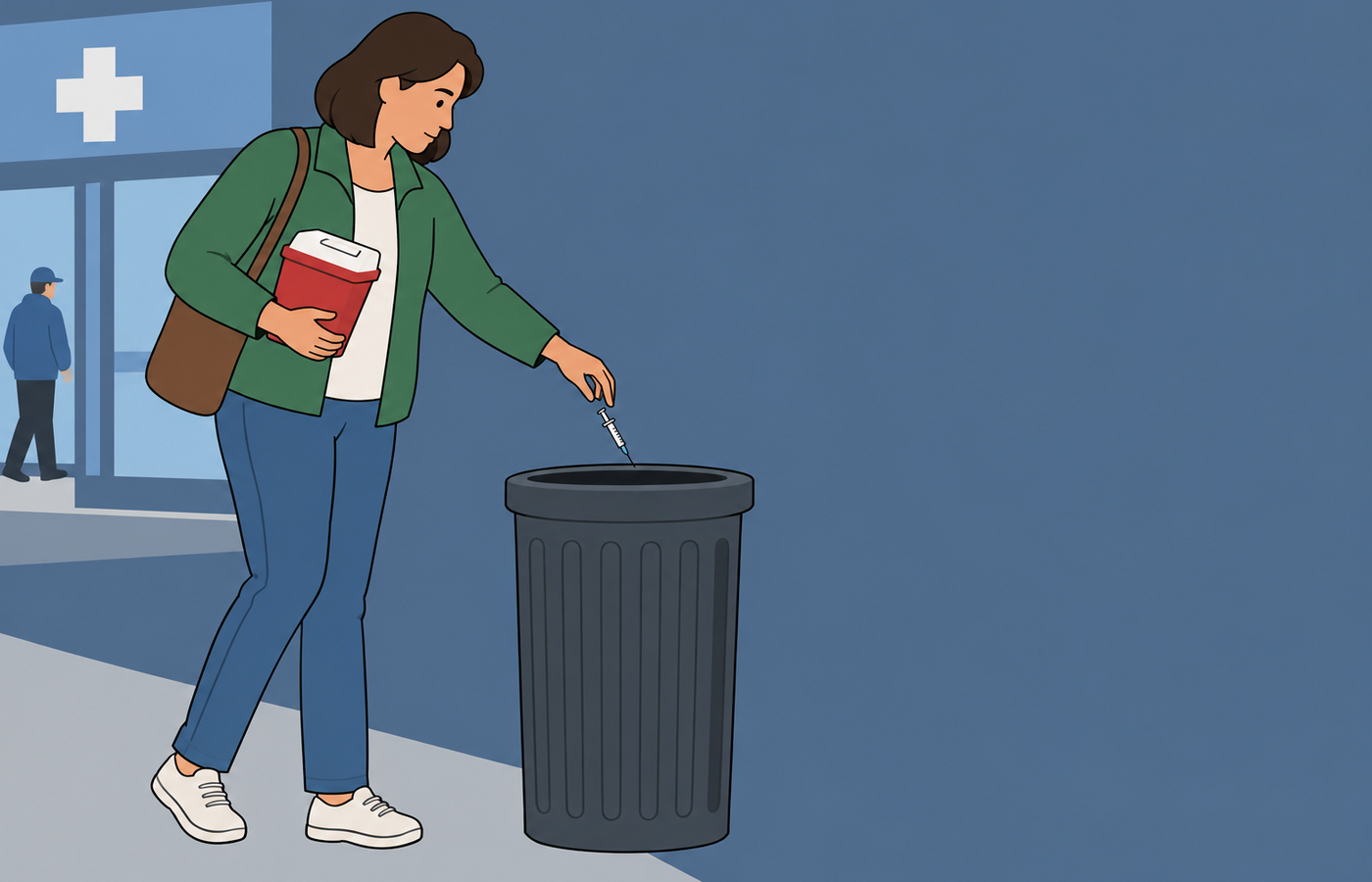
The New York City Department of Sanitation (DSNY) has raised the fine for improperly discarding household medical waste from $100 to $250. Needlestick injuries among sanitation workers have reached 73 this year, nearly double the 37 recorded in all of 2024. Used needles must be placed in a sealed, labeled, puncture-resistant container for disposal or taken to a designated drop-off site.
The New York City Department of Sanitation (DSNY) has raised the fine for failing to dispose of household medical waste according to regulations from $100 to $250. According to amNewYork, the higher fine took effect this week. It applies to items that can stick or cut workers, such as syringes with needles and IV tubing, when they are mixed in with ordinary household trash. The previous $100 fine had been in place since 2022.
According to DSNY, workers have suffered 73 needlestick and similar injuries this year, nearly double the 37 recorded in all of 2024. After an incident, a worker typically must go through an emergency room visit, a course of antiviral medication to prevent infection, blood tests and a consultation with an infectious disease specialist. Workers generally take sick leave until the medication's side effects subside. DSNY spokesperson Vincent Gragnani told amNewYork that the fine was raised to protect workers and that disposing of used needles safely and legally is not difficult.
Under city rules, sharp medical items such as used syringes, needles, surgical blades and lancets must be placed in a sharps container or another leak-proof, puncture-resistant container. An empty laundry detergent bottle is a typical example. Residents should close the lid tightly, label it "home sharps," and put it out with the regular trash. They can also take the items to hospitals, nursing homes, SAFE Disposal Events, or medication and needle drop-off sites across the state; DSNY advises calling ahead to confirm hours and locations. More information is available at nyc.gov/dsny.
People with diabetes use lancets to check blood sugar, and many with Type 1 diabetes inject insulin with syringes. People who take GLP-1 drugs such as Ozempic or Mounjaro also use an auto-injector once a week. New York City households that use these drugs at home could face a $250 fine if they simply toss used needles into a regular trash bag. Separately, DSNY has launched a public awareness campaign and is adding mechanized collection equipment so workers do not have to lift trash by hand.