
Step into the area on the west side of Midtown Manhattan, between 34th and 42nd streets and between Fifth and Ninth avenues, and a large bronze plaque set into the sidewalk and a giant needle-and-button sculpture suspended overhead catch the eye. This is the Garment District, the cradle of the American fashion industry and a concentration of New York's creative energy.
Step into the area on the west side of Midtown Manhattan, between 34th and 42nd streets and between Fifth and Ninth avenues, and a large bronze plaque set into the sidewalk and a giant needle-and-button sculpture suspended overhead catch the eye. This is the Garment District, the cradle of the American fashion industry and a concentration of New York's creative energy. Seventh Avenue, nicknamed "Fashion Avenue," is the main thoroughfare that shows at a glance the stylish identity of New York, a global fashion capital.

The district's most notable spatial feature is its distinctive vertical loft buildings, constructed in the early and middle decades of the 20th century. Their wide floor plates, able to hold large cutting tables, and their tall, oversized windows, designed to let workers judge the true color of fabric, reflect the industrial architectural aesthetic particular to Midtown, built to maximize production efficiency. Amid the stark concrete skyscrapers, the grid-patterned brick buildings, weathered by more than 100 years, and the sight of people hurrying back and forth pulling garment racks evoke both New York's turbulent history and its distinctly analog character.
2. A Turbulent History and Industrial Legacy: The District That Produced 70% of America's Ready-to-Wear in the 20th Century

The history of the Garment District parallels the labor history of the immigrants who came to New York from Europe in the late 19th and early 20th centuries. The district's golden age began in earnest when skilled Jewish and Italian garment workers from Eastern Europe left the poor home-based working conditions of Manhattan's Lower East Side and moved to the modern factory zone in Midtown. During its heyday, from the 1920s to the 1950s, more than 70 percent of the women's clothing and ready-to-wear apparel consumed across the United States was designed and manufactured within these few blocks.

At the time, the Garment District was more than a place where clothes were made. It was an industrial melting pot that drove the American ready-to-wear revolution. The Garment Worker Statue, at the intersection of 39th Street and Seventh Avenue, is a historic symbol honoring the dedication of the anonymous workers who ran sewing machines in the harsh conditions of the big city and helped raise New York to the ranks of the world's four major fashion capitals. Through wars and the Great Depression, honest labor and an avant-garde design sensibility demonstrated New York's economic resilience. That history remains a unique cultural asset and a deeply rooted heritage of which New York is proud today.
3. A One-Stop Fashion Ecosystem Beneath the Button and Needle Sculpture: An Overwhelming Competitive Edge
The Garment District is still regarded as an irreplaceable destination by designers and fashion students around the world because it has a "one-stop fashion ecosystem," in which every step of making clothing is completed within just a few blocks. From design concept to fabric sourcing, pattern making, the purchase of buttons and materials, and finally prototyping, the entire fashion process is organically connected within walking distance.

- Mood Fabrics: Made world-famous as a filming location for the competition show "Project Runway," this store, stocked with tens of thousands of types of high-quality fabrics and materials, is an essential hub of New York fashion.
- Fashion Walk of Fame: Plaques set into the Seventh Avenue sidewalk honor the achievements of New York-based designers who conquered the world, including Calvin Klein, Ralph Lauren, Donna Karan and Marc Jacobs.
- Specialty materials and trimmings suppliers: Centered on 37th and 38th streets, analog shops that specialize in rare lace, buttons, feathers and leather goods are clustered together, helping designers turn original ideas into reality.
In the modern fashion industry, where trends change rapidly, this kind of one-stop production infrastructure serves as a powerful aesthetic and industrial engine, allowing independent designers and emerging creators to turn ideas into products quickly.
4. From Analog Factories to Creative Spaces: Urban Reinvention and Modern Dining Side by Side
Large-scale garment factories have gradually dwindled as global production bases moved overseas and urban redevelopment took hold. But rather than stagnating and becoming a relic, the Garment District has carried out a sophisticated "urban regeneration" effort. Under the leadership of the local nonprofit Garment District Alliance, many of the loft buildings once used as analog factories have been transformed into fashion-tech startups, design studios, architecture offices and artists' workspaces.

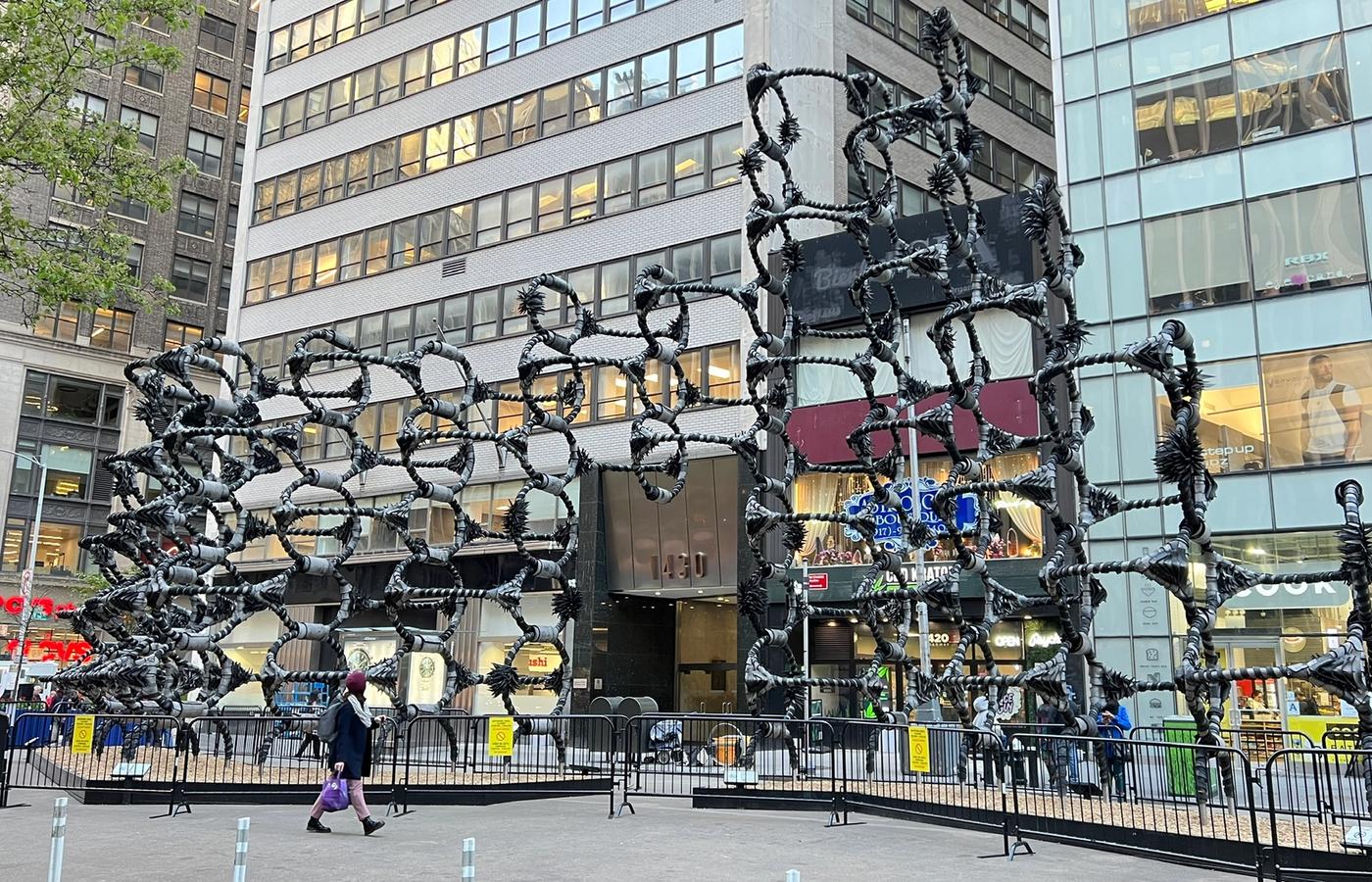
Stylish boutique hotels that preserve the classic exteriors of 1920s Art Deco buildings, rooftop bars with stunning night views of the Empire State Building, and dining venues run by Michelin-starred chefs have also moved in, reborn as a major lifestyle destination for the entire district. Seasonal public art installations and pedestrian plazas found throughout the streets offer passersby unexpected artistic inspiration. With the grit of the rough analog garment industry meeting contemporary dining, the Garment District is the most New York of places, proof of how classic heritage and future trends can breathe together.
[Garment District Key Areas and Visitor Guide]
© NY&NJ. Unauthorized reproduction and redistribution prohibited.
ⓒ New York and New Jersey. Unauthorized reproduction and redistribution are prohibited.