
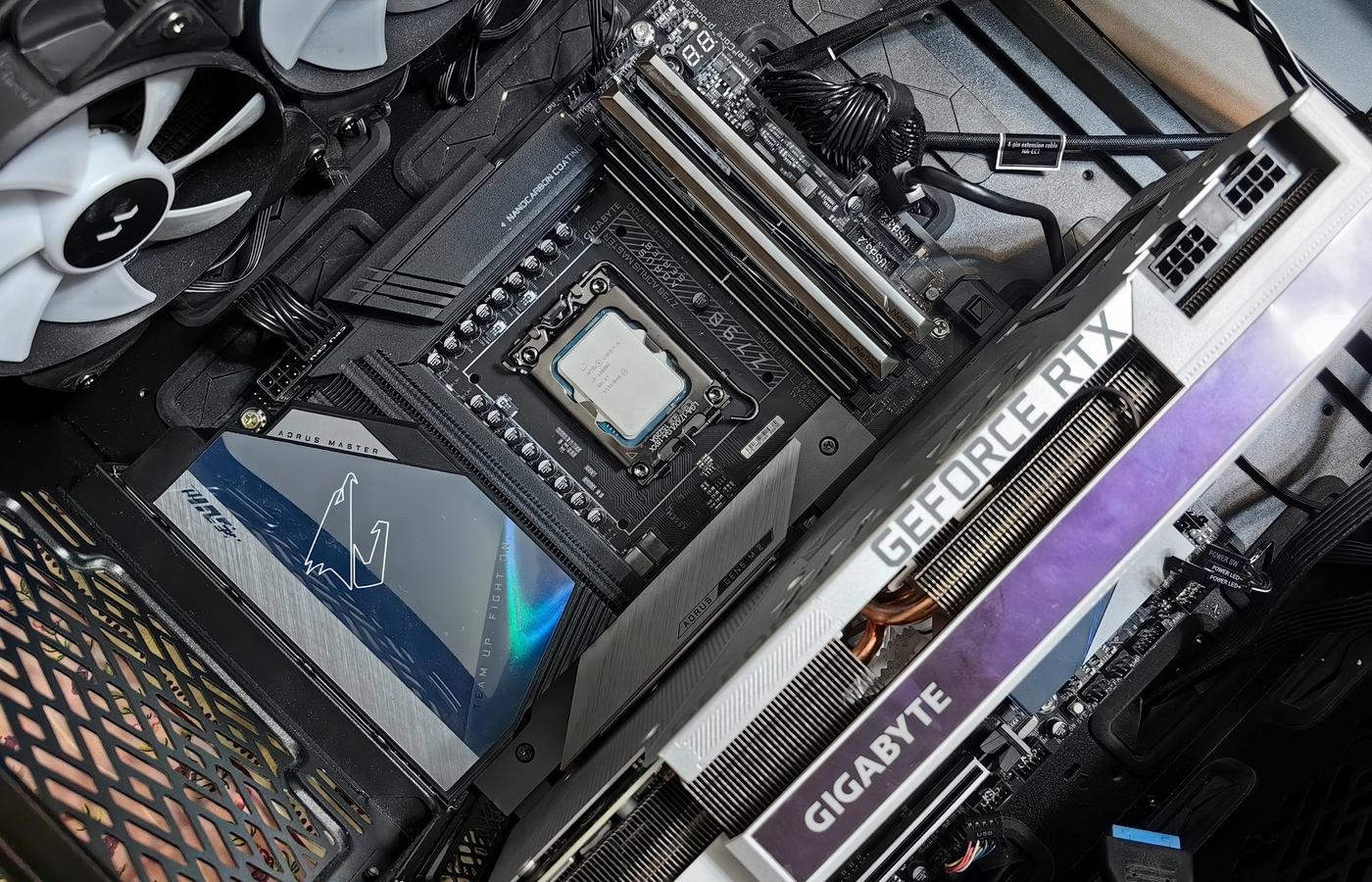
The history of the global information technology (IT) industry has run alongside one giant name: Intel Corporation. Intel turned the once rugged orchard country of California's West into Silicon Valley, the world's capital of advanced technology, and led the personal computer (PC) revolution.
The history of the global information technology (IT) industry has run alongside one giant name: Intel Corporation. Intel turned the once rugged orchard country of California's West into Silicon Valley, the world's capital of advanced technology, and led the personal computer (PC) revolution. It was more than a chip manufacturer. It was a symbol of American technological dominance, linking East Coast capital with West Coast technology.
But arrogance in the face of the rapid shift to mobile, technical stumbles in securing manufacturing yields on advanced process nodes, and exclusion from the artificial intelligence (AI) supercycle led by Nvidia pushed the once-impregnable chip empire to the edge of survival almost overnight. The fall of a one-time absolute monarch, and its recent all-in counterattack in foundry (contract chip manufacturing) and dedicated AI chips, offers some of the sharpest real-world management lessons for global companies now facing a major technological turning point.
1. The Golden Age Begins: The x86 Monopoly and the Legend of 'Wintel'
Intel was founded in 1968 by Robert Noyce and Gordon Moore, and was later joined by Andy Grove, who preached "only the paranoid survive." The company started out in memory chips (DRAM). In the 1980s, however, Japanese rivals' low-priced offensive took away its lead in the memory market, and Intel boldly and swiftly shifted its focus to an unfamiliar field: the central processing unit (CPU). That decision became a decisive watershed that completely redrew the map of the semiconductor industry.
Intel's decades-long monopoly took shape with the birth of the x86 architecture. Through the 1980s and '90s in particular, "Wintel," the tight alliance between Microsoft's Windows operating system and Intel's CPUs, completely captured the global standard for personal computers. Every software developer had to write programs for Intel's chipsets. That created powerful network effects and raised the barriers to entry for latecomers sharply.
Intel widened its technological lead further with its elaborate "Tick-Tock" strategy, alternating each year between architecture innovation (Tick) and manufacturing process shrinks (Tock). Its vertically integrated model, the Integrated Device Manufacturer (IDM), handled everything from chip design to production in its own advanced fabs under one roof. It delivered top-tier yields and unrivaled operating margins approaching 60%. The signature chime heard whenever a PC started up, and the "Intel Inside" sticker attached to the machine, became a luxury-brand mark of world-class performance and reliability.
2. A Giant Slips: Three Strategic Tragedies Caused by the 'Innovator's Dilemma'
The cracks in what seemed an eternal Intel empire began quietly, with complacency born of overwhelming market share and an internal structure fixated on short-term financial results.
The first decisive blunder came in 2006, when Intel turned down the chance to supply the mobile application processor for the iPhone. Paul Otellini, CEO at the time, flatly rejected Apple co-founder Steve Jobs's request for Intel to manufacture the processor for the first iPhone. The price Apple offered could not meet Intel's high-margin standards, and Intel misjudged, on short-term financial grounds, that the smartphone would never grow enough to threaten the PC market. That single refusal gave Qualcomm, the ARM architecture and Taiwan's foundry giant TSMC a decisive foothold to seize leadership of the global mobile ecosystem.

The second tragedy was the loss of manufacturing leadership and a failed gamble on EUV. Intel weighed adopting extreme ultraviolet (EUV) lithography equipment, which could overcome the limits of existing exposure tools, and missed its window. As a result, it suffered severe yield problems and repeated shipment delays in moving to the 10-nanometer (nm) and 7nm process nodes. While Intel floundered in that technical morass, Taiwan's TSMC, which had moved early to adopt EUV across the board, overtook Intel in advanced process technology. Fabless design specialist AMD, backed by TSMC's cutting-edge process, ate into Intel's market share at a frightening pace.
The third root cause was the disappearance of engineering culture and the damage done by finance-driven management. As pioneering engineer-executives such as Robert Noyce and Andy Grove left and executives from finance backgrounds, including former chief financial officers (CFOs), took control, long-term R&D and investment in manufacturing facilities were pushed down the priority list. Decisions driven by financial engineering were repeated: hitting immediate quarterly targets and buying back shares to prop up the stock price mattered more than developing next-generation processes. Meanwhile, Intel's deep-rooted technological competitiveness was quietly growing cold from within.
3. The AI Supercycle and the Foundry Pivot: IDM 2.0 and the 18A Process as Intel's Big Bet
Standing at the edge of the cliff, Intel made the most desperate decision in its history in 2021. It abruptly brought back Pat Gelsinger, a legendary Intel engineer, as CEO to rescue the company. The comeback play Intel launched after he took office was a strategy called "IDM 2.0." It was a bold declaration. Intel would break out of its closed garden of producing only its own chips and flexibly combine internal chip design with outside foundries. At the same time, it would fully re-enter the advanced foundry business (Intel Foundry Services, or IFS), manufacturing chips for global Big Tech companies on contract.
Intel's counterattack is turning a corner as it dovetails with the CHIPS Act, the U.S. government's strong policy to bring semiconductor production back home. Intel is building cutting-edge fab infrastructure in Arizona, Ohio and elsewhere with direct and indirect subsidies from the federal government worth billions of dollars. In particular, Intel is putting into effect a roadmap to win back the crown of world No. 1 in advanced process technology, which it lost to TSMC. It plans to be the first in the world to bring next-generation High-NA EUV lithography equipment into actual mass production, and to establish Intel 18A (1.8nm class) and the next-generation 14A process early.
At the same time, amid the seismic shift brought by the generative AI supercycle, Intel has also entered the AI accelerator market that Nvidia dominates. Against Nvidia's CUDA software ecosystem, it launched the Gaudi 3 AI accelerator, with strong price-performance and an open architecture as its weapons. Building on the solid base of its Xeon server processors, which have long dominated the data center market, Intel is working to check Nvidia's solo run in the enterprise AI market, where global companies are looking to adopt large language models (LLMs), and to expand real partnerships there.
4. Three Key Lessons for the Global Tech Ecosystem and Industry
Intel's 50-year rise and fall, and its desperate recent comeback effort, offer three highly important lessons for executives and engineers in advanced industries today.
The first is the cold reality of the "Innovator's Dilemma" that Professor Clayton Christensen warned about. A company stuck on its past winning formula, a PC CPU monopoly with margins as high as 60%, makes the fatal mistake of dismissing new technological signals that look low-margin and small at first, such as mobile application processors and AI-dedicated GPUs. The moment it settles into the sweet profitability of its current main products and puts off remaking itself, disruptive innovation blows in from a remote country village and swallows the pillars of the empire in an instant.
The second is a return to the principle that the foundation of a tech company is engineering, not the financial statement. Finance-centered management, fixated on managing short-term financial statements and on share buybacks to prop up the stock price, gradually erodes the R&D capability and the manufacturing-floor expertise that a tech company needs to survive. The income statements of the next year or two may be dressed up nicely, but the core process technology that must carry the company five or ten years out runs dry. A tech company's real value is created not by making the numbers in the accounting books add up, but through repeated failures and constant experimentation on the manufacturing floor and in the lab.
The third is a reassessment of manufacturing infrastructure as a matter of geopolitical security and technological sovereignty. The era of globalization, when a division of labor between fabless companies that only design and foundries that only manufacture looked most efficient, is over. Today, with the U.S.-China technology hegemony struggle and instability in global supply chains, including those serving the East Coast, now a constant, owning cutting-edge semiconductor manufacturing infrastructure (fabs) within a country's own borders is being seen in a new light. It is no longer just a question of one company's profitability but a core national technology-security asset.
In the end, Intel's path goes beyond the rise and fall of a single company. It shows clearly how a tech company must guard against its own arrogance during a major paradigm shift, and how critical it is to survival to hold on to its core engineering philosophy. That is why the eyes of the global semiconductor industry are once again turning to Intel's 18A process and its AI accelerator ecosystem.