
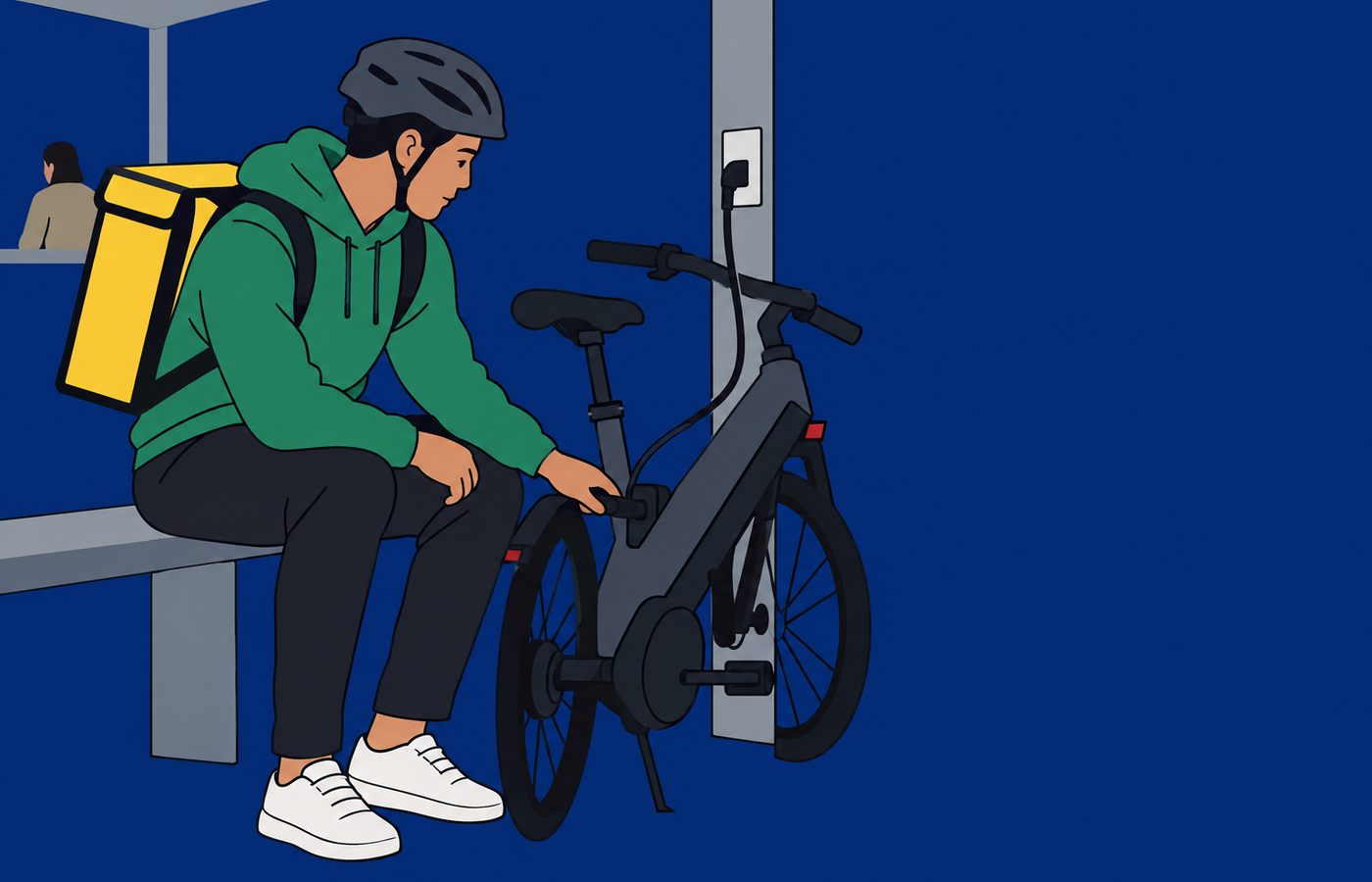
New York City Councilmember Harvey Epstein plans to introduce a bill on Thursday, the 12th, that would require delivery platform companies to set up rest hubs for delivery workers. The hubs would include restrooms and space for charging and storing e-bikes, with detailed standards to be set by the city's Department of Consumer and Worker Protection. Gothamist reported the news.
According to Gothamist, City Councilmember Harvey Epstein plans to introduce a bill on Thursday, the 12th, that would require delivery platform companies to set up rest hubs for delivery workers. The hubs would have to include restrooms and space for charging and storing e-bikes. Until now, most of this burden has fallen on the city's roughly 80,000 e-bike delivery workers themselves. Many of them are working-class immigrants who often have no suitable place to store their bikes safely, the outlet reported.
The bill grew out of East 11th Street in Manhattan's East Village, between First Avenue and Avenue A. Hundreds of delivery e-bikes line the curb on this block every day, and nearby residents have complained that they block the street. The city installed bike racks and hired a contractor for extra cleaning, and the NYPD repeatedly seized bikes for illegal parking. But Epstein said those measures did not reduce the number of bikes. The underlying problem, he said, is that delivery workers need a safe place to leave their bikes and wait between orders, and that has not been solved.
If the bill passes, the Department of Consumer and Worker Protection would determine details such as the number and locations of the hubs. The agency would have to draft the relevant rules within one year of the law taking effect. Epstein said companies should solve the problem themselves rather than relying on government. He also said he looked to examples such as Amazon and the e-bike delivery company JOCO, which operate indoor spaces where workers can rest and store their bikes overnight. Uber Eats, Grubhub and DoorDash did not respond to requests for comment. Epstein said he reached out to the companies while drafting the bill.
City-run infrastructure is still lacking. The Mamdani administration opened the first delivery worker hub near City Hall in April. The hub, which has charging stations and a rest area, was built with federal funding. Ligia Guallpa, executive director of the worker advocacy group Worker's Justice Project, noted that the hub is popular but is the only one. The city Department of Transportation plans to install 25 e-bike charging stations across the city starting at the end of next year, using $3 million in state funding. Cassio Mendoza, a spokesperson for the mayor's office, said the administration would review the bill but added that delivery app companies need to do more.
Lithium-ion battery fires are also a factor. Citing Fire Department data, Gothamist reported that this year, fires involving lithium-ion batteries, commonly used in e-bikes and other devices, have killed nine people and injured 71 in New York City. After falling last year, deaths and injuries are rising again. Fire deaths citywide have doubled over the past year, and some are linked to lithium-ion battery fires.