
Starting in January 2026, New York subway and bus fares are $3, and the OMNY weekly cap is $35 (12 rides). The cap runs not Monday through Sunday but on a rolling 7 days from the first tap, and it accrues only on the same payment method. MetroCard sales ended at the end of 2025, and the final date it can be used has not been set. PATH is $3.25 from May and accepts only TAPP from September. NJ Transit raised fares 3% on July 1, NYC Ferry is $4.50, the Staten Island Ferry is free, the JFK and Newark AirTrain is $8.75, and congestion pricing is $9. Also covered: how to apply for the $1.50 reduced fare for riders 65 and older, Fair Fares income eligibility, and Long Island Rail Road and Metro-North CityTicket
2026 is the year New York's transit fare system changed all at once. In January, subway and bus fares rose to $3, and with MetroCard sales ended, OMNY tap payment became the default. PATH fares rose in May, and from September PATH will no longer accept SmartLink either. NJ Transit raised fares 3% in July. Focusing on routes popular with Korean Americans, we checked fares and rules as of Sept. 15, 2026, against official materials from the MTA, the Port Authority and NJ Transit.
OMNY: The Cap Is a 7-Day Rolling Window, Same Card Only
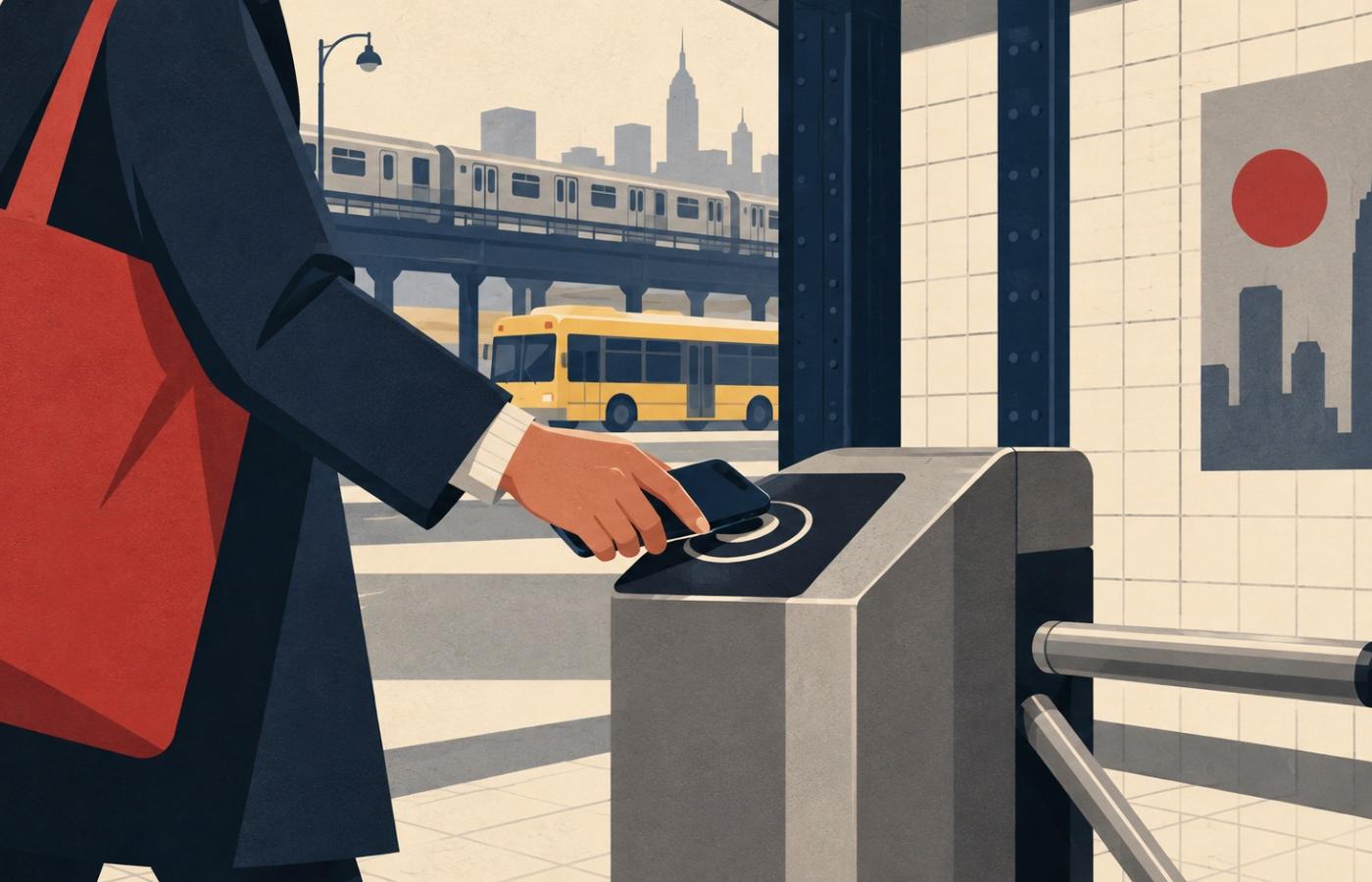
Every turnstile and bus has an OMNY reader. Just tap a contactless credit or debit card, Apple Pay, Google Pay, a smartwatch or an OMNY card; no app download or sign-up is required. On the subway, you tap only when entering. The weekly cap works like this: once you pass 12 paid rides ($36) within 7 days of your first tap with the same payment method, the remaining rides are free. The count does not start on Monday; it is a rolling window that begins with the first tap. A physical card and a phone wallet holding the same card are counted separately, and if a phone holds several cards, each card is counted on its own. The cap applies to the subway, local and SBS buses, the Staten Island Railway, the Roosevelt Island Tram, Hudson Rail Link, Nassau NICE and Westchester Bee-Line. A free transfer is allowed within 2 hours of the first tap, once, between subway and bus or bus and bus, and one trip including a transfer counts as one ride toward the cap. Up to three companions can also be tapped in with the same card, but those additional taps do not count toward the cap and are charged the full fare. With a new card, you must wait about one minute between the first tap and the second.
MetroCard: Balances Still Usable, but End Date Not Set
MetroCard sales and refills ended on Dec. 31, 2025. Remaining balances can continue to be used during 2026, and the MTA will separately announce the final end date for use later this year. The 7-day and 30-day unlimited passes had to be activated by March 31. Balances can be moved to an OMNY card at a subway station customer center. Cash payment on buses is also scheduled to end along with the MetroCard. According to MTA guidance, an OMNY card costs $1 (balance separate) and can be bought at OMNY vending machines installed at all 472 stations by fall 2025 and at more than 2,700 retail stores, including Walgreens, CVS and 7-Eleven; cash refills are also accepted. If you create an account at omny.info and register your card, you can check your progress toward the cap, reload online or automatically, and have your balance frozen if the card is lost; unregistered cards get no compensation for loss. Balances can be transferred within two years after the card expires.
Reduced Fares and Fair Fares
Riders 65 and older and riders with disabilities pay the reduced fare of $1.50 ($3.60 for express buses, except weekdays 6–10 a.m. and 3–7 p.m.). Online applications are currently closed. Riders 65 and older who present ID such as a driver's license, passport or IDNYC at one of 15 subway station customer centers (open 24 hours), at 3 Stone Street in Manhattan (weekdays) or at a mobile sales van receive their card the same day. Mail-in applications take up to three months. Fair Fares, for New York City residents ages 18 to 64, offers half-price fares. In June, the city announced it would widen the income limit from 150% to 200% of the federal poverty line ($31,920 for one person, $66,000 for a family of four), but applications under the expansion are scheduled to open after the end of the year, so you should check the current criteria at nyc.gov/fairfares. Children under 44 inches (about 112 cm) ride free, up to three per fare-paying adult.
Long Island Rail Road and Metro-North: CityTicket and the 11th Ride Free
Since Jan. 4, 2026, CityTicket for trips within New York City has cost $5.25 off-peak and $7.25 at peak. Peak means weekday trains arriving at a New York terminal between 6 and 10 a.m. or departing between 4 and 8 p.m. (for Metro-North, this also includes trains departing Grand Central between 6 and 9 a.m.); weekends and holidays are off-peak all day. Ten-trip tickets were eliminated in 2025. Instead, if you buy 10 tickets of the same type for the same route in the TrainTime app within 14 days, the 11th is free. Children ages 5 to 17 pay $1 when accompanied by an adult, up to four children, and there are now no time-of-day restrictions. Buying onboard costs an additional $7.75 to $8.50, and repeatedly boarding and then activating a ticket in the app brings an $8 penalty. Seniors, riders with disabilities and Medicare cardholders get up to 50% off even at peak and are exempt from the onboard surcharge. One-way tickets expire at 4 a.m. the next day.
PATH: $3.25, TAPP Only from September
PATH rose from $3 to $3.25 on May 4, and will go up 25 cents each January, reaching $3.50 in January 2027 and $4 in 2029. TAPP multi-ride options are 10 rides for $31, 20 rides for $62 and 40 rides for $124 ($3.10 per ride), plus a 1-day unlimited pass for $12.50, a 7-day pass for $42.75 and a 30-day pass for $131.50; the reduced fare for riders 65 and older and riders with disabilities is $1.60. SmartLink and MetroCard acceptance ends on Aug. 31, so from Sept. 1 only contactless cards, phones and TAPP cards will work. SmartLink balances can be transferred on request by calling 800-234-7284 until February 2027. TAPP cards are sold at vending machines at all stations and at TAPPandRide.com.
NJ Transit: 3% Increase in July, Fort Lee and Palisades Park Buses
Under a 2024 board decision, NJ Transit fares rise automatically by 3% every July 1, and they did so again on July 1 this year. Fares for children, seniors and riders with disabilities are frozen. Buses are priced by zone, starting at $1.90 for intrastate Zone 1. Routes 158, 166 and 167 from the Port Authority Bus Terminal to Fort Lee, Palisades Park and Leonia are Interstate Zone 2, and Englewood is Zone 3. On the June fare table before the increase, Interstate Zone 1 was $2.15, Zone 2 was $4.10, a Zone 2 monthly pass was $126 and a 10-trip ticket was $34.50. Applying 3% would put a Zone 2 one-way fare at $4.20 to $4.25 and a monthly pass at around $130, but you should confirm the exact current amounts on NJ Transit's Northern Interstate fare table. Interstate buses to New York neither issue nor accept transfers, and tickets must be bought in advance at the Port Authority and George Washington Bridge terminals. Monthly rail passes costing $67 or more allow free rides on buses and light rail up to the zone printed on the pass. FlexPass, which returned in February, gives 15% off 20 one-way trips on a specific route, to be used within 30 days. Mobile tickets in the app and tap-card payment are available on all routes.
Ferries, AirTrain and Congestion Pricing
NYC Ferry costs $4.50 one way, $29 for 10 rides and $15 for a 2-day unlimited pass in the app; the fare is $1.45 for riders 65 and older, riders with disabilities, Fair Fares participants and middle and high school students. Free transfers are allowed within 120 minutes, and children under 44 inches ride free. The Staten Island Ferry is free. NY Waterway's official website still shows old fares, so check the app or on site. The JFK AirTrain costs $8.75 when entering or exiting at Jamaica or Howard Beach. Riders tap with OMNY, and there is a 30-day rolling cap of $43.50; if a group taps together within 5 minutes, the first person pays $8.75 and each additional person pays $4.50 (five people pay $26.75). The Newark AirTrain is also $8.75, is included in NJ Transit and Amtrak tickets, and is free between terminals. Congestion pricing for Manhattan south of 60th Street is $9 for passenger cars with E-ZPass at peak (weekdays 5 a.m. to 9 p.m., weekends 9 a.m. to 9 p.m.) and $2.25 overnight, charged once per day. Without E-ZPass there is a surcharge of about 50%, and the toll will rise to $12 in 2028 and $15 in 2031.
If Something Goes Wrong
For double charges or charges above the cap, check the ride history in your omny.info account and then call 877-789-6669 (24 hours). If there is a severe delay, you can ask station staff for a Courtesy Pass, which is valid for 48 hours. Long Island Rail Road and Metro-North charge off-peak fares all day on New Year's Day, Martin Luther King Jr. Day, Presidents' Day, Memorial Day, Independence Day, Labor Day, Thanksgiving and the day after, and Christmas. This guide is based on official pages from the MTA, OMNY, the Port Authority, NJ Transit and NYC Ferry. We will update the exact NJ Transit zone fares after July, the final MetroCard end date and the start date for Fair Fares expansion applications as they are announced.