
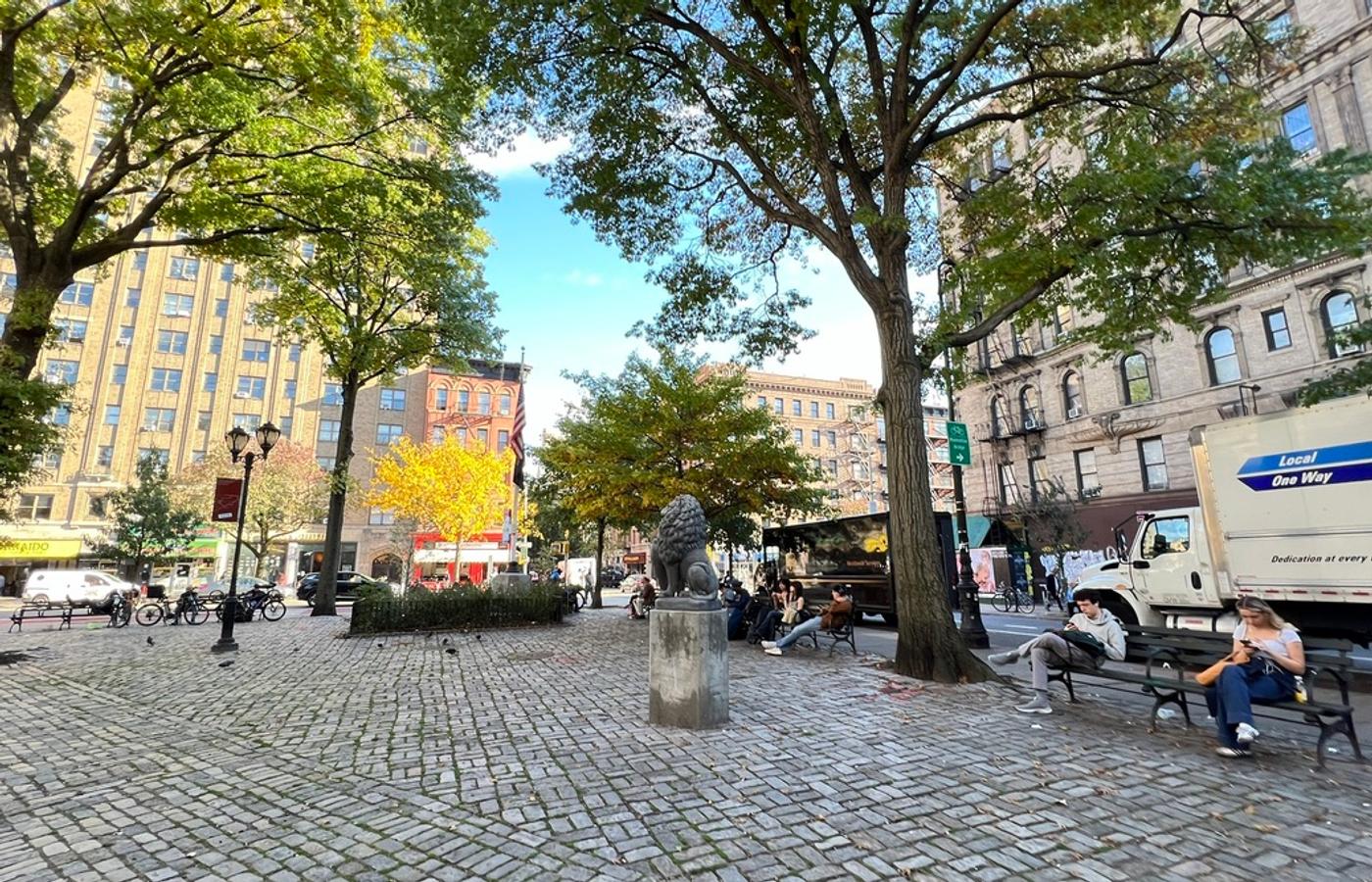
St. Mark's Place, the three-block stretch of East 8th Street that runs east-west through Manhattan's East Village from Cooper Square to Avenue A, is one of the most culturally layered streets in all of New York City. This short street, only several hundred meters long, has been a key stage for American pop culture, immigrant history and the bohemian art movement over the past century.
St. Mark's Place, the three-block stretch of East 8th Street that runs east-west through Manhattan's East Village from Cooper Square to Avenue A, is one of the most culturally layered streets in all of New York City. This short street, only several hundred meters long, has been a key stage for American pop culture, immigrant history and the bohemian art movement over the past century.

From the late 19th century to the early 20th century, large numbers of German immigrants settled here, making the street the center of "Kleindeutschland" (Little Germany). By the mid-20th century, it had begun to transform into a vast cultural melting pot where youth culture and avant-garde artists from around the world gathered. Beneath its distinctive buildings, with their red-brick facades and tangled fire escapes, the lives of immigrants and the passion of young people have naturally accumulated layer upon layer.
The aesthetic identity of St. Mark's Place has never been that of a perfectly tidy downtown, but of a living, breathing vitality that is constantly discordant. The diverse mix of people on the street, the exotic languages and the graffiti covering the walls of its buildings show that this street has preserved the most distinctly New York variety within the great city of New York itself.
A Liberated Zone for Youth: A Holy Land of Counterculture, Punk Rock and the Bohemian Revolution
From the 1960s through the 1980s, St. Mark's Place was a mecca for young people around the world who resisted the established order and longed for free self-expression, and the front line of the counterculture. Pop art masters including Andy Warhol and hippie activists filled the street, and it rose to the center of popular culture, appearing on album covers and in music videos by the rock group The Rolling Stones.

In particular, during the punk rock revival of the late 1970s, St. Mark's Place was linked to the legendary club CBGB and led the golden age of rock 'n' roll. As the punk fashion landmark Trash and Vaudeville, along with numerous vintage record shops, tattoo and piercing parlors and independent bookstores, clustered along the street, it became a stronghold of freedom where young people could break free from convention and feel completely liberated.
In this period, social outcasts, wandering youths and visual artists unafraid of experimentation gathered day and night to debate and play music. St. Mark's Place was a bold cultural laboratory that showed how New York could function as a global center of creativity.
A Wave of Ramen and Japanese Food: The "Little Japan" Era, Tinged With an Eastern Aesthetic
In the late 1990s and early 2000s, as the heated energy of punk rock and the counterculture gradually cooled, St. Mark's Place underwent another decisive transformation. As Japanese immigrants and restaurateurs settled on the street one after another, it took on a new cultural identity as the so-called "Little Japan."

During this period, St. Mark's Place was the outpost that brought authentic Japanese ramen culture and izakaya pub culture to New York in earnest. Yakitori skewer restaurants, handmade ramen shops, Japanese dessert cafés, tea houses and specialty markets selling Japanese household goods filled its narrow alleys and basement arcades.
The sharp, intense energy once generated by the counterculture fused with the charming, neat sensibility unique to Japan, adding a more diverse, exotic color to the street. The sight of New Yorkers lining up night after night in front of ramen shops, where the aroma of rich pork-bone broth drifts out, symbolically showed that St. Mark's Place had changed from a space of Western youth culture into a global bridgehead embracing an Eastern aesthetic.
Broadening the Horizons of Food and Pop Culture: A Great Shift Into a Vanguard of Pan-Asian Culture

From the 2010s to the present, St. Mark's Place has leapt a step further, moving beyond the framework of "Little Japan" to become a "vanguard of pan-Asian culture" encompassing the food and pop culture of all of Asia. On the foundation laid by Japanese culture, the vibrant contemporary cultures of many Asian countries, including Korea, China, Taiwan, Vietnam and Thailand, have blended together, establishing the street as a quintessential Asian hot spot.
Today, within just a few steps of one another on this street, visitors can find authentic Taiwanese tapioca bubble tea shops and crispy jipai (Taiwanese fried chicken cutlet) stands, Sichuan-style mala tang and dim sum specialists, and Korean-style seasoned fried chicken, hot dogs and fusion snack shops reflecting the latest trends.
This explosive expansion of food is creating strong synergy as it coincides with the global success of K-pop and Asian media content. Young New Yorkers and tourists from around the world taste the latest Asian trend foods at St. Mark's Place, buy Asian pop culture merchandise, and experience with all five senses the unique urban energy created by the flexible interweaving of East and West. St. Mark's Place has become the liveliest offline platform for spreading Asian aesthetics in the heart of New York.
The Most New York and Most Global of Places: An Inclusive Street Where Exotic Cultures Breathe Together

The true value of St. Mark's Place today lies in the way traces of German immigrants from the 1900s, the vintage aura of 1970s punk rock and the diverse Asian cultures that have flourished since the 2000s are layered on top of one another and coexist in a single place. Rather than following the typical redevelopment approach of completely denying and overwriting the past, it has developed by fully embracing the cultural scars of past eras along with newly arrived exotic elements.
An authentic Korean dessert café next to an old punk-style clothing store, and the fire escape of a 100-year-old brown brick building looming above a brilliantly neon-lit Asian pub: this scenery is a one-of-a-kind sight found only at St. Mark's Place. This street, where people from diverse backgrounds mingle, share one another's food and embrace one another's cultures, best shows the great inclusiveness of New York, a city that has not shunned the unfamiliar but absorbed it as part of itself.

In the end, by never losing its values of freedom and multiculturalism amid constant change, St. Mark's Place continues to develop as a landmark that is both the most New York and truly global. Visitors to New York are encouraged to stroll slowly through the street's alleys, which brim with history, youth and the dynamic vitality of Asia, and connect with the diverse energy of life that the city gives off.
[St. Mark's Place Visitor Guide]
- Location: Manhattan, NY (8th Street, Cooper Square / between 3rd Ave and Avenue A)
- Public transportation: A 2- to 3-minute walk from the Astor Place station (6 train) and the 8 St-NYU station (N/R/W lines)
- Afternoon and evening visits recommended: During the day, it is a pleasant, quiet bohemian street for a stroll. After sunset, in the evening hours, visitors can experience St. Mark's Place's distinctively lively nightlife, along with the bright neon signs of Asian pubs, ramen shops and bubble tea shops.
- Look closely at the second floors and basement shops as well: This street has historic izakayas, vintage shops and Asian dessert cafés hidden not only on the ground floor but also at the bottom of basement stairways and in second-floor spaces, so watching carefully for sidewalk signs adds to the fun of exploring.
© NY&NJ. Unauthorized reproduction and redistribution prohibited.
ⓒ New York and New Jersey. Unauthorized reproduction and redistribution are prohibited.