
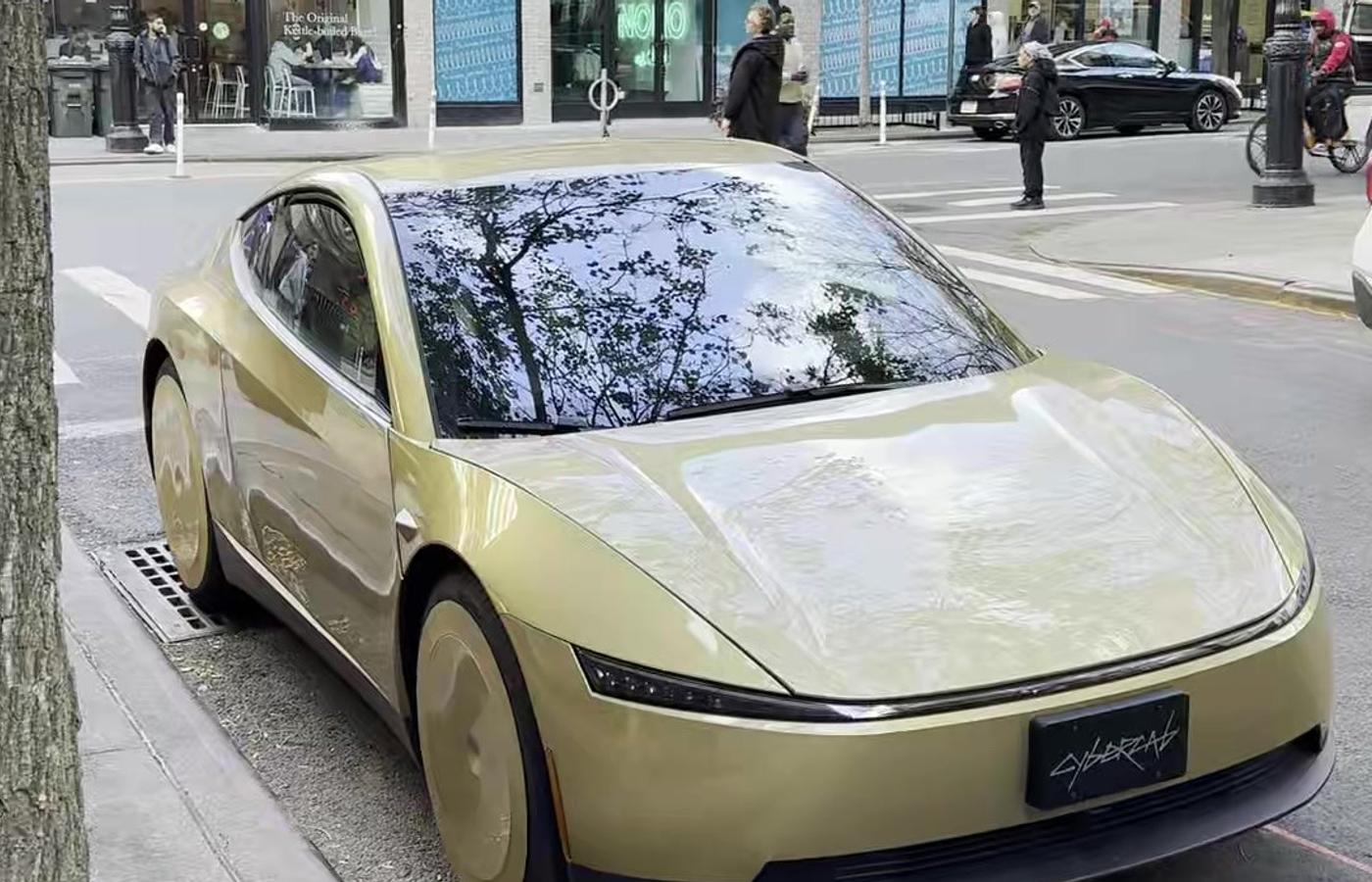
Tesla's Cybercab, built as a driverless taxi, is now running on the streets of New York and New Jersey. Here, however, it carries a driver and has a steering wheel, because New York State law prohibits driverless operation. Tesla classifies the runs as 'supervised' self-driving tests and is operating without city or state permits. It is also hiring safety drivers and data collection staff in Flushing.
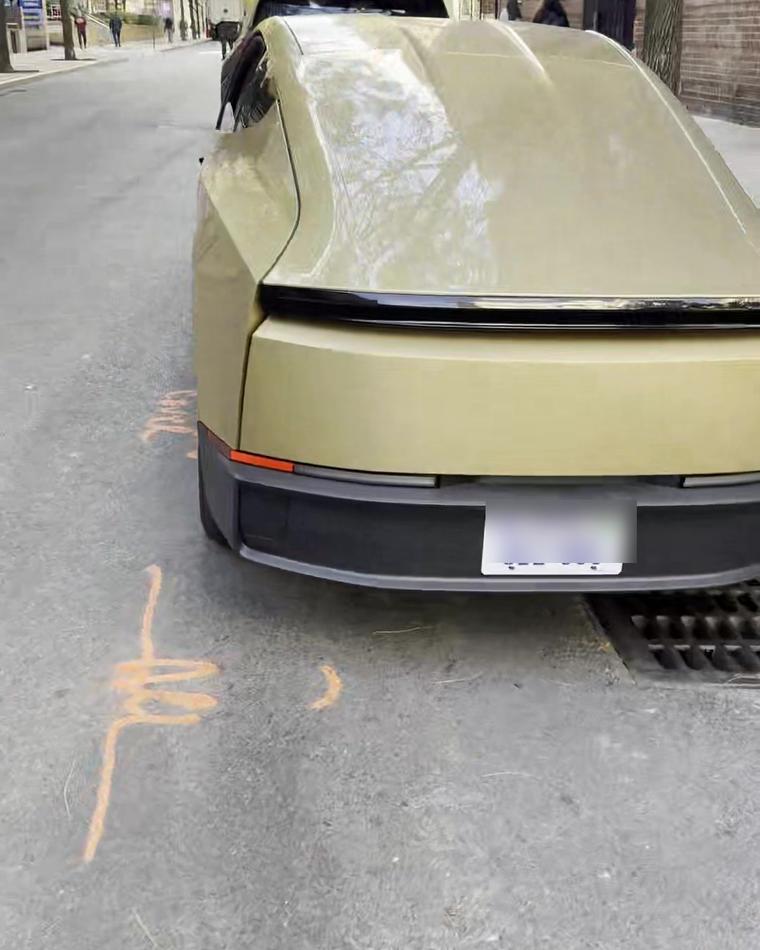
A vehicle built to carry passengers without a driver is carrying a driver in New York. This is the story of Tesla's two-seat robotaxi, the Cybercab. On the afternoon of the 21st, a gold Cybercab sat at the corner of East 8th Street and Mercer Street in Greenwich Village, Manhattan. It had a Texas license plate in the back and a 'Cybercab' logo in place of a plate number in the front. Passersby stopped and took out their phones. The number of people who say they have recently seen the car in New York and New Jersey has risen sharply.
In Texas, It Arrives Empty
Tesla unveiled the Cybercab in October 2024. It has no steering wheel, no pedals and no side mirrors. When summoned through an app, the empty vehicle arrives and picks up two passengers. Production began at the Austin Gigafactory in April this year, and in early September it began carrying paying passengers in six cities in Texas, Florida and California.
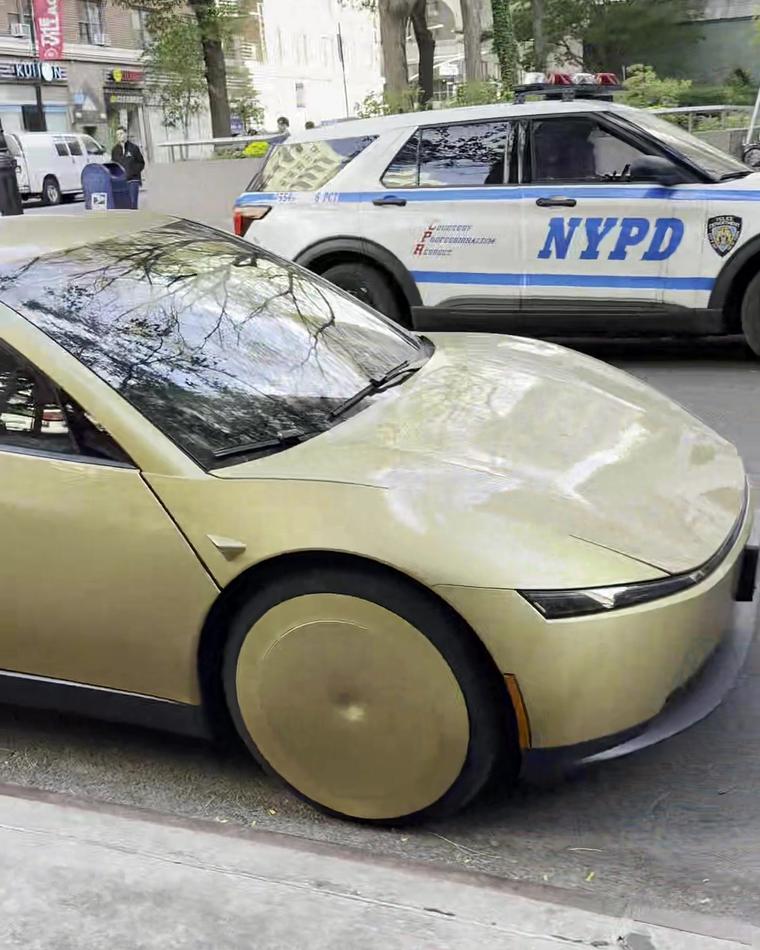
The cars circulating in New York look the same only on the outside. Reporters at the local outlet Gothamist have spotted them repeatedly in Manhattan and Brooklyn since late August, and every one had a person in the driver's seat and a steering wheel installed. The car seen in the Village that day was no different. New York State law requires a driver to keep a hand on the wheel at all times, so a vehicle without a steering wheel cannot be on public roads in the first place. Tesla sidestepped the problem by fitting its New York test vehicles with steering wheels.
Why It Runs Without a Permit
By adding a steering wheel, Tesla also got around the permit process. According to Gothamist, the New York City Department of Transportation (DOT) said that what Tesla is testing is 'supervised' self-driving, in which the car drives itself but a driver can intervene at any time. It said that this is classified as driver assistance (Level 2), not autonomous driving (Level 4), and therefore does not require a testing permit. The New York State Department of Motor Vehicles (DMV) confirmed that Tesla has never applied for a permit to test autonomous vehicles.
The city DOT said Tesla did not notify it in advance; the agency saw the cars on the street and contacted the company first. Tesla did not respond to the outlet's inquiries. Waymo, which did the same thing, took a different approach. Waymo, owned by Google's parent company Alphabet, received a six-month testing permit from the city and state last year and drove with drivers on board. According to Waymo, it filed 10 reports during that period and met with the DOT more than 20 times. The permit expired in March this year.
Carrying Data, Not Passengers
It is not known how many vehicles are in New York or how long they will stay. Tesla's job postings, however, suggest the purpose. Tesla is hiring 'AI Safety Drivers' and 'Data Collection Supervisors' for autonomous vehicles at $25 to $30 an hour, to work in Flushing, Queens, and Buffalo. The effort appears to be a stage in which people keep their hands on the wheel while data is gathered on how well the self-driving software, FSD, holds up on New York's roads, where cutting-in taxis, double parking and tangled delivery bikes are routine.
Just as Uber Did
Some view this approach as comparable to Uber's precedent. In the early 2010s, Uber entered New York through a gap in the black car licensing system and grew its fleet to tens of thousands of vehicles. When the City Council tried to regulate it, Uber mobilized its users and defeated the effort. Bruce Schaller, a transportation analyst who has studied Uber's entry into New York, said, 'It may be a strategy of building a user base first to overwhelm regulators.' Matthew Wansley, a professor at Cardozo School of Law, said, 'It makes it look like it can drive itself, but the technology has not yet gotten there.'
Midori Valdivia, chair of the New York City Taxi and Limousine Commission (TLC), said, 'My biggest concern is the impact on the livelihoods of 180,000 drivers.' Bhairavi Desai, executive director of the New York Taxi Workers Alliance, said, 'It's a strategy of placing a few in many cities and making it look inevitable.' Most of New York's taxi and ride-hail drivers are immigrants, and not a few are Korean Americans.
TLC rules do not permit commercial operation of autonomous vehicles. For the Cybercab to carry passengers without a driver in New York, state law and city regulations must change first. Until then, the Cybercabs on the streets are vehicles carrying data, not passengers.