
SEOUL, Aug. 23 (Yonhap) -- South Korea's alcoholic beverage production plunged to below 3 million kiloliters (kl) for the first time in 27 years in 2025, data showed Sunday, signaling a structural decline in the industry with more South Koreans turning to healthy lifestyles.
Shipments of beer and soju have fallen for three consecutive years since 2022, while those of takju, or traditional Korean rice liquor, have dropped for five consecutive years as of 2025, according to the data from the National Tax Service.
The total output of alcoholic beverages stood at slightly below 2.99 million kl last year, marking the first time since 1998 that it hovered below 3 million kl.
By type of drinks, shipments of beers stood at about 1.52 million kl last year, down 7.2 percent from a year earlier. Shipments of soju and takju also showed consistent declines, recording 793,000 kl and 318,000 kl last year, respectively.
The prolonged decline in shipments of the three popular alcoholic beverages appears to signal a structural shift in drinking trends, driven by growing health consciousness, population decline, aging of the population and changing attitudes toward late-night gatherings.
A report by the agriculture ministry showed both the volume and frequency of alcohol consumption have slowed recently, with many consumers turning to specific types of drinks or trying out new drinks instead.
In one instance, domestic shipments of fruit wines amounted to 17,000 kl last year, surpassing the 17,000 kl mark for the first time since 2021.
The alcohol industry has been introducing new non-alcoholic and low-alcohol beverages, as well as products with a variety of flavors and scents, to offset the decline in shipments of traditional alcoholic drinks.
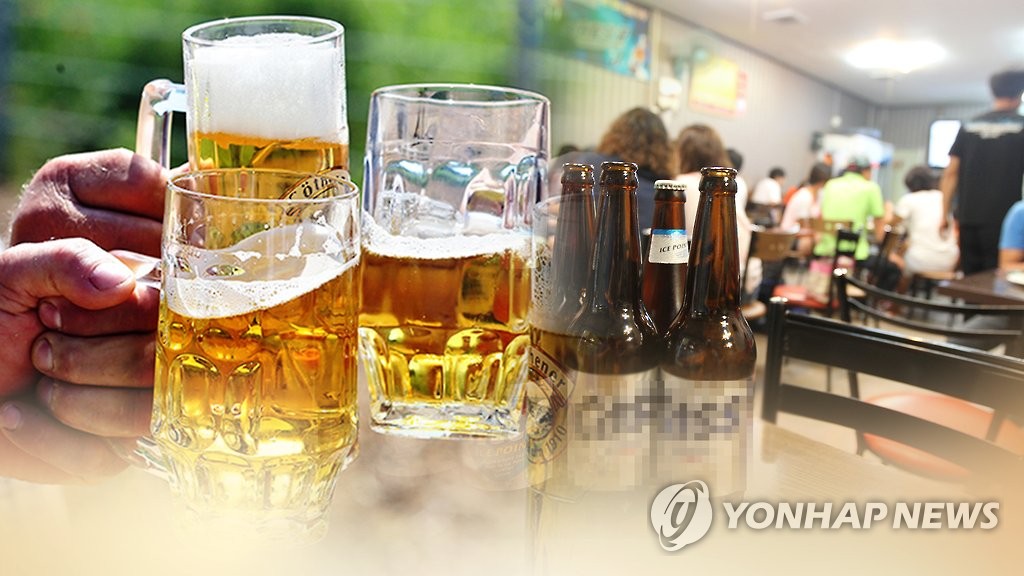
This file photo, provided by Yonhap News TV, illustrates a decline in alcohol consumption due to a recession, on April 5, 2016. (Yonhap)