
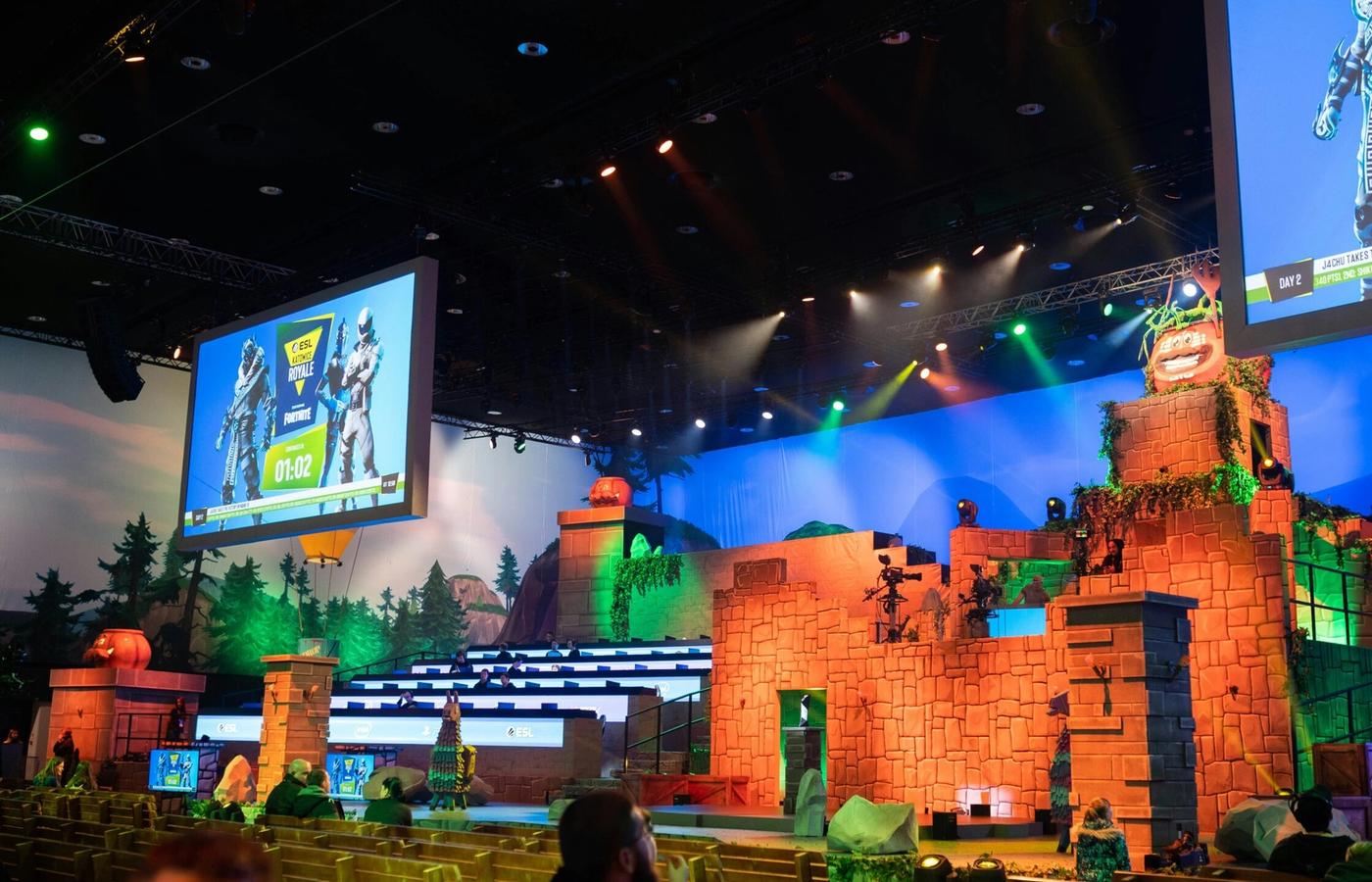
To trace the roots of e-sports—now a multi-billion-dollar global phenomenon captivating hundreds of millions worldwide—one must go back to a very specific spatial and historical moment: South Korea in the late 1990s. In the immediate aftermath of the 1997 Asian Financial Crisis, the South Korean government executed a massive national initiative to construct high-speed broadband infrastructure. Powered by this fiber-optic network, a new urban space rapidly proliferated in neighborhood alleyways across the country: the PC bang (internet cafe). Early PC bangs quickly transcended their role as mere public internet hubs, evolving into physical, neighborhood agoras where youth gathered to compete and socialize over networked multiplayer games.

Inside this unique incubator, Blizzard Entertainment’s real-time strategy game StarCraft: Brood War triggered an explosive cultural reaction. Korea’s intense competitive drive, collective play culture, and high-performance PC networks converged to transform gaming from a solitary pastime into a spectator sport. Until then, the global consensus held that video games were a secluded, individual activity. South Korea radically inverted this perception, proving that watching video games could be a compelling, collective spectator experience.
By 1999, dedicated 24-hour gaming cable channels like Ongamenet and MBCGame emerged. Professional color commentary, high-production TV studios, cinematic opening sequences, and star players elevated game broadcasts to the prestige of traditional prime-time sports. Legendary players such as Lim Yo-hwan (“The Emperor”), Hong Jin-ho, Lee Yun-yeol, Choi Yeon-sung, and later Lee Young-ho cultivated massive, dedicated fandoms.
To govern this burgeoning scene, South Korea established the Korean e-Sports Association (KeSPA) under the Ministry of Culture, Sports and Tourism, formalizing player registration, league schedules, and standardized contractual frameworks. Major Korean conglomerates—including SK Telecom, KT, Samsung Electronics, and CJ—eagerly founded professional gaming teams, injecting corporate capital into the ecosystem. South Korea was the first nation to build a fully integrated sports ecosystem with dedicated broadcast media, full-time professional athletes, corporate sponsorships, and a formal regulatory body. The framework established during this era served as the foundational blueprint for global e-sports.
Spectacles Beyond Borders: Global Streaming Platforms and Genre Diversification
Entering the 2010s, e-sports evolved beyond its origins in a single nation (South Korea) and a single game ( StarCraft ), exploding into a global phenomenon fueled by a rapidly shifting media landscape. The primary catalyst for this expansion was the advent of global live-streaming platforms alongside the global success of new multiplayer competitive titles.
Platforms such as Twitch and YouTube Gaming dismantled national broadcasting barriers overnight. The spectator experience, once reliant on regional cable television networks, shifted to a high-definition, real-time internet streaming ecosystem. Global audiences could now watch the same matches simultaneously, transcending linguistic and geographic boundaries through shared digital chats and community hubs.

During this era, game titles underwent a rapid generational shift. Riot Games’ League of Legends (LoL) , Valve’s Dota 2 , and Counter-Strike: Global Offensive (CS: GO) emerged as mainstream global e-sports powerhouses. Riot Games, in particular, modeled its structure after major North American sports leagues (NBA, NFL, MLB), establishing regional franchised leagues across Korea (LCK), China (LPL), Europe (LEC), and North America (LCS). This culminated in the annual LoL World Championship , an international tournament that mirrors traditional mega-sporting events.
As a result, e-sports evolved into a global spectacle rivaling the UEFA Champions League. World-class arenas—such as Seoul World Cup Stadium, the Staples Center in Los Angeles, and the Beijing National Stadium—were filled to capacity with tens of thousands of fans. Iconic figures like Lee “Faker” Sang-hyeok attained global celebrity status rivaling traditional sports icons, demonstrating that e-sports had become the definitive mainstream culture for digital natives.
In recent years, the industry has expanded beyond PCs into mobile e-sports. Games like PUBG Mobile and Honor of Kings have experienced explosive growth in emerging markets across Southeast Asia, Latin America, and the Middle East, transforming e-sports into a platform-agnostic, multi-genre global entertainment industry.
From “Play” to “Legitimate Sports”: Institutionalization and Capital Dominance
Once dismissed as a frivolous pastime or scrutinized under the lens of video game addiction, e-sports has secured official recognition from international sports governing bodies and attracted massive institutional capital.

The most symbolic milestone in establishing e-sports’ legitimacy has been its integration into multi-sport games. After appearing as a demonstration event at the 2018 Jakarta-Palembang Asian Games, e-sports officially debuted as a medal event at the 2022 Hangzhou Asian Games. Watching professional gamers stand on podiums, hear their national anthems, and receive medals confirmed that e-sports had transcended pure physical mechanics to earn recognition as a legitimate sport driven by high-level cognitive precision, reflexes, and strategic execution.
The International Olympic Committee (IOC) responded by formally approving the creation of the Olympic Esports Games, aiming to engage younger generations and accelerate its digital strategy.
According to market intelligence and industry reports, the global e-sports market revenue crossed between $3 billion and $5 billion (including betting and adjacent ecosystems), with global viewership surpassing 640 million. Over 50% of this audience comprises Gen Z and Millennials, making e-sports an indispensable engagement channel for global brands.
This institutional ascent attracted tier-one corporate sponsors, including Mercedes-Benz, Louis Vuitton, Red Bull, Intel, and Samsung Electronics. At the same time, iconic traditional sports clubs—such as Paris Saint-Germain (PSG), FC Barcelona, and the Golden State Warriors—established or acquired their own esports franchises.
More recently, the Saudi Arabian government positioned e-sports as a cornerstone of its “Vision 2030” national strategy. By hosting the annual Esports World Cup (EWC) in Riyadh—boasting an unprecedented prize pool exceeding $70 million—Saudi Arabia has reshaped competitive gaming’s financial landscape. This underscores that e-sports has moved beyond commercial entertainment to become a vital arena for state-level soft power and diplomacy.
AI Synergy and Next-Gen Mobility: Redefining the Future of Sports
Having evolved from alleyway PC bangs into a global media spectacle, e-sports is entering its next frontier, driven by artificial intelligence (AI), virtual reality, and advanced sports science.
First, AI is revolutionizing performance analytics and training systems. Player development, which once relied on intuitive coaching, now leverages AI algorithms that analyze metrics like actions per minute (APM), eye-tracking data, and micro-reaction times in real time. Deep-learning AI training partners simulate opponent strategies and pinpoint tactical vulnerabilities, fundamentally elevating competitive standards.
Second, athlete care and infrastructure have matured. The industry has addressed past issues with short career spans and chronic physical strains by incorporating sports medicine. Professional teams now deploy physical therapists, orthopedic specialists, and mental health coaches to manage wrist injuries, spinal posture, and burnout. Furthermore, collegiate e-sports scholarships, academic degree programs, and post-retirement career transition frameworks are institutionalizing long-term career stability.
Third, e-sports is redefining the future of sports media. While traditional sports grapple with aging demographics, e-sports offers an inherently digital, interactive viewing experience. Innovations such as customizable camera feeds, real-time data overlays, and immersive VR/AR broadcasts are setting new benchmarks for how audiences engage with competitive entertainment.
The story of e-sports is not merely a history of video games; it is an epic narrative of how digital technology and human competitiveness merged to redefine the boundaries of modern sport. What began in the modest PC bangs of South Korea has expanded into a global constellation of athletic, technological, and economic power. As the world transitions from evaluating performance solely by physical muscle to celebrating the synergy of cognition, reflexes, and strategy, e-sports stands as the most complete prototype of 21st-century athleticism.
ⓒ 뉴욕앤뉴저지. 무단전재 및 재배포 금지
ⓒ New York and New Jersey. Unauthorized reproduction and redistribution are prohibited.